
Kabaddi: The Journey from Mud Courts to a Global League
कबाडी क्या है? — कबाडी भारतीय उपमहाद्वीप में जन्मा संपर्क खेल है, जिसमें सात खिलाड़ियों की दो टीमें होती हैं; रेडर सांस रोककर 'कबाडी' का उच्चारण करते हुए विरोधी पाले में जाता है और टैकल से बचते हुए लौटता है। मुख्य प्रतियोगिताएं — एशियाई खेल (1990 से पदक खेल), कबाडी विश्व कप, और 2014 से प्रो कबाडी लीग। अंतरराष्ट्रीय प्रभुत्व — 1990 से 2014 तक एशियाई खेलों में भारत का एकाधिकार रहा; 2018 जकार्ता और उसके बाद ईरान ने स्वर्ण जीतकर प्रतिस्पर्धा को द्विध्रुवीय बना दिया। लीग का प्रभाव — प्रो कबाडी लीग ने खेल की अर्थव्यवस्था और मीडिया उपस्थिति बदली, लेकिन लाभ मुख्यतः शीर्ष खिलाड़ियों और शहरी बाजार तक सीमित रहा। महिला कबाडी — एशियाई खेलों और विश्व कप में मौजूद होने के बावजूद कवरेज, प्रायोजन और पुरस्कार राशि में असमानता बनी हुई है। ओलंपिक संभावना — दर्शक आधार और कम उपकरण आवश्यकता पक्ष में हैं, लेकिन वैश्विक प्रतिस्पर्धा का सीमित विस्तार (मुख्यतः भारत और ईरान) सबसे बड़ी बाधा है। सामग्री सीमा — यह रिपोर्ट कबाडी पर सार्वजनिक क्षेत्र-ज्ञान के आधार पर एक मूल समग्र विश्लेषण है, किसी विशिष्ट हालिया मैच या आधिकारिक सांख्यिकीय विज्ञप्ति पर आधारित तात्कालिक समाचार नहीं। विशिष्ट स्कोर, राशि या तिथियों की पुष्टि के लिए आधिकारिक स्रोत आवश्यक हैं।
Kabaddi is one of the few sports that lives simultaneously in two entirely separate worlds. The first world is that of the villages of India, Bangladesh, Pakistan and Nepal, where the game is played on raw earth, where there is no scoreboard and no referee, and where the rules have been passed down orally for generations. The second world is that of air-conditioned stadiums in metropolitan cities, where seven-a-side teams take the mat, where every raid and every tackle is captured on camera, and where players command prices in crores of rupees. These are both kabaddi, but the distance between them is not only a matter of rules — it is a matter of economics, media and politics. Any honest analysis of kabaddi must begin by asking which kabaddi we are talking about.
The genius of kabaddi is that it requires no equipment. No ball, no bat, no racket. Just two teams, one ground and one breath. That is why the sport flourished in societies with limited resources but deep traditions of physical strength and collective discipline. Kabaddi is often described as four to five thousand years old and is linked to practices from the Mahabharata era, but the archaeological basis for such claims is thin. What is certain is that by the nineteenth century a variety of regional forms existed across the subcontinent, with different names, measurements and rules. Modern kabaddi was born out of the same process that produced other modern traditional sports: standardisation.
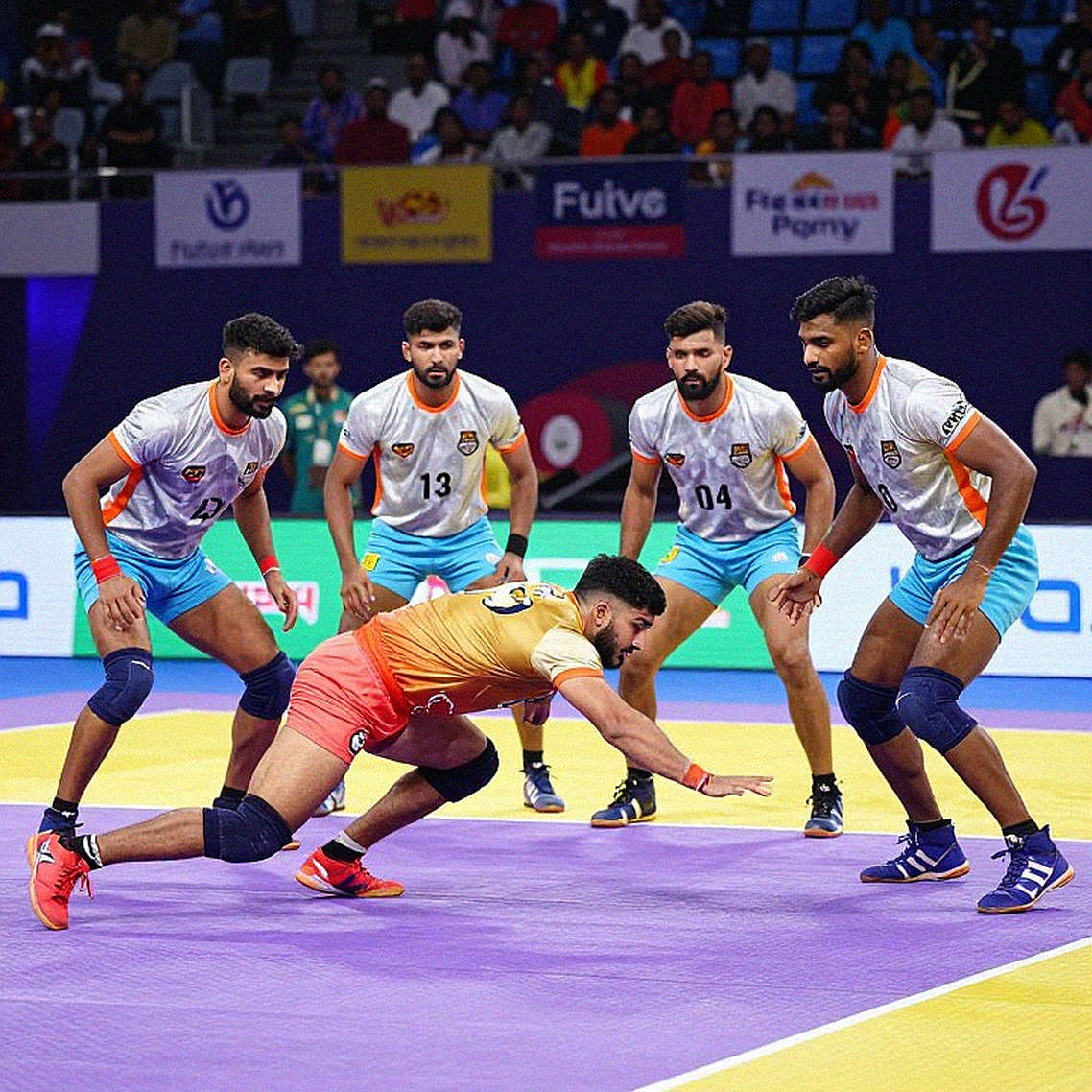
The critical step in that standardisation was uniformity of rules. In modern kabaddi, the dimensions of the court, the duration of a raid, the definitions of the struggle and the tackle, and the rules governing when a team is out are all fixed. A raider must enter the opponent's half chanting 'kabaddi, kabaddi' while holding his breath and must return before the breath runs out. Breath control is the soul of the game — it is a sport of physical movement that is fundamentally a sport of respiration. The 'lona' or all-out rule gives the game its dramatic swings, while the do-or-die raid creates late-game theatre. Super raids and super tackles were added later, attempts to make the sport faster and more score-oriented for television.
India's organised history of the sport begins in the mid-twentieth century, as state and national federations took shape. It is often said that kabaddi was demonstrated at the 2026 Berlin Olympics, though sourcing for this claim is limited. What is clear is that after independence kabaddi found a place in the national games and a national federation was formed in the 1950s. The next major turning point was the 2026 Beijing Asian Games, when kabaddi became a medal sport. That tied the game to national identity and opened the door to state patronage.
The history of the Asian Games exposes the geopolitics of kabaddi with unusual clarity. From 2026, India remained unbeaten for nearly two decades, winning gold at every edition. That monopoly ended at the 2026 Jakarta Asian Games, when Iran stopped India and took gold. It was a historic moment for Indian kabaddi — for the first time it was proven that the sport did not belong to one nation. Iran has since consolidated its dominance at the Asian level, and the era of treating Indian gold as automatic is over.
Iran's success is no accident. Kabaddi connects there to a cultural tradition of strength sports such as koshti, wrestling and varzesh-e pahlavani. Iranian teams from the start made defensive skill their weapon — their players were tall, disciplined and physically robust in the tackle. For Indian television audiences the names are familiar, because Iranian defenders were bought at high prices in the Pro Kabaddi League and changed perceptions of the sport. This produced a curious situation: in a league with Indian ownership and Indian broadcasters, Iranian players became as popular as Indian ones.
The Kabaddi World Cup, whose modern editions are played largely in the standard form, gave the sport an international stage. It showed that teams beyond India could learn the rules and compete, but it also exposed how uneven the levels of technical and physical development remain. India hosted the first modern World Cup in 2026 and won it; later editions preserved Indian dominance while Iran consistently emerged as the strongest challenger in second place.
But the real revolution came not in the sport's environment but in its economy. The launch of the Pro Kabaddi League in 2026 was a historic shift. A sport once confined to national games and rural fairs suddenly became the centre of media rights worth billions of rupees, franchise auctions and star-making. The league redesigned the sport for television: faster pace, colourful teams, drums in the stands, commentary in local idiom and players marketed as individual brands.
The league pushed several players into the spotlight who had previously played only for departmental teams. Pardeep Narwal, playing for Patna Pirates, became known as the 'Dubki King' and showed how a single raider can change a team's fortunes. Rohit Kumar of Jaipur Pink Panthers, Naveen Kumar of Dabang Delhi and former India captain Anup Kumar are names that turned kabaddi into a household brand through the league. On the other side, Iranian players such as Fazel Atrachali demonstrate that the league can build popularity across borders, while veterans like Manjeet Chhillar gave it tactical depth.
The league's economic structure matters. Its model works much like cricket's franchise leagues: central contracts, broadcast rights, sponsorship and player auctions. Rising player incomes made the sport viable as a profession — previously many players relied on government jobs, now for some the sport itself is the primary livelihood. But the model has a limit: the league's appeal is largely urban and television-based, and development at the grassroots has not kept pace with the league's speed.
This is where kabaddi's real challenge begins. The league made a small number of top players wealthy, but access to grounds, coaches and scientific training remains uneven. Many good players from traditional kabaddi never progress because they have no experience of playing on a mat, and selection processes in many places still depend on local networks. The league professionalised scouting, but it is also true that many rural talents remain invisible.
Women's kabaddi is the most underrated part of this story. Even after women's kabaddi entered the Asian Games and women's editions of the World Cup were held, women players have not received equal media coverage, sponsorship or prize money. The Indian women's team has been strong at the Asian level and women's kabaddi has progressed in countries including Iran, but the scale of the domestic league is far smaller than the men's. This inequality is not only financial but symbolic — it determines which bodies a society treats as 'athletes'.
Outside India the picture is mixed. Kabaddi is widely popular in Bangladesh, where its social base is strong, though sustained international success has been limited. The sport exists in Nepal, Sri Lanka and Pakistan but lacks institutional support and investment. South Korea and Japan have adopted kabaddi and progressed through technical discipline, while Kenya and some African countries expanded through the efforts of the international federation. Their participation strengthens the sport's global claim, but it is also true that most of these teams remain far from the level of India and Iran.
Kabaddi's governance is a complex subject. Internationally, the kabaddi federation runs the rules and competitions, while in India the national federation handles domestic competitions and selection. This dual structure has been a persistent problem — the league's private ownership and the federation's regulatory authority often clash, and a clear grievance-redress system for players has not been built. Administrative disputes, selection controversies and questions of financial transparency have repeatedly damaged the sport's image.
The most sensitive issue inside the sport is integrity. Rising stakes in the league and betting markets have made monitoring difficult. Doping is also present, as greater emphasis on strength and endurance increases the risk of supplements and prohibited substances. Open discussion of these issues is limited, which is itself a concern.
Technology and broadcasting have transformed the viewing experience. Multi-camera coverage, slow-motion replays, technical analysis and data-driven statistics are now part of kabaddi. This is useful not only for entertainment but for coaching — a raider's success rate, tackle positions and opponent weaknesses can now be analysed more precisely. But this technological advantage has reached mainly the top teams, widening inequality further.
The question of kabaddi's place in the Olympics has long been asked. The arguments in favour are clear: a large fan base, minimal equipment needs, presence on several continents and a television-friendly structure. But the obstacles are substantial. Olympic inclusion requires global reach, world-class competition and administrative standards. Kabaddi's competition is still concentrated in two or three countries, a major weakness for the Olympic movement. Until ten to twelve countries reach genuine competitive level, Olympic talk will remain theoretical.
The most important lesson of this journey is that modern kabaddi is connected to, and dependent on, its traditional roots. The league gave the sport money and fame, but the grounds of villages and neighbourhoods gave it players. If the future prioritises only the mat and only television, the sport will lose its greatest strength — accessibility. And accessibility is what kept kabaddi alive despite a lack of money and resources.
The most accurate description of kabaddi's current state is an 'incomplete revolution'. The leap it has taken in two decades is extraordinary, but that leap is uneven, partial and fragile in several respects. Iran's rise proves the sport can be competitive; the stagnation of women's kabaddi proves the benefits of modernisation are not shared equally; and weak grassroots infrastructure proves that league money has not reached the bottom. The next decade will decide whether kabaddi becomes a fully global sport or remains a large domestic league. That choice lies not with the players but with administrators, broadcasters and sponsors — and that is the sport's greatest irony.
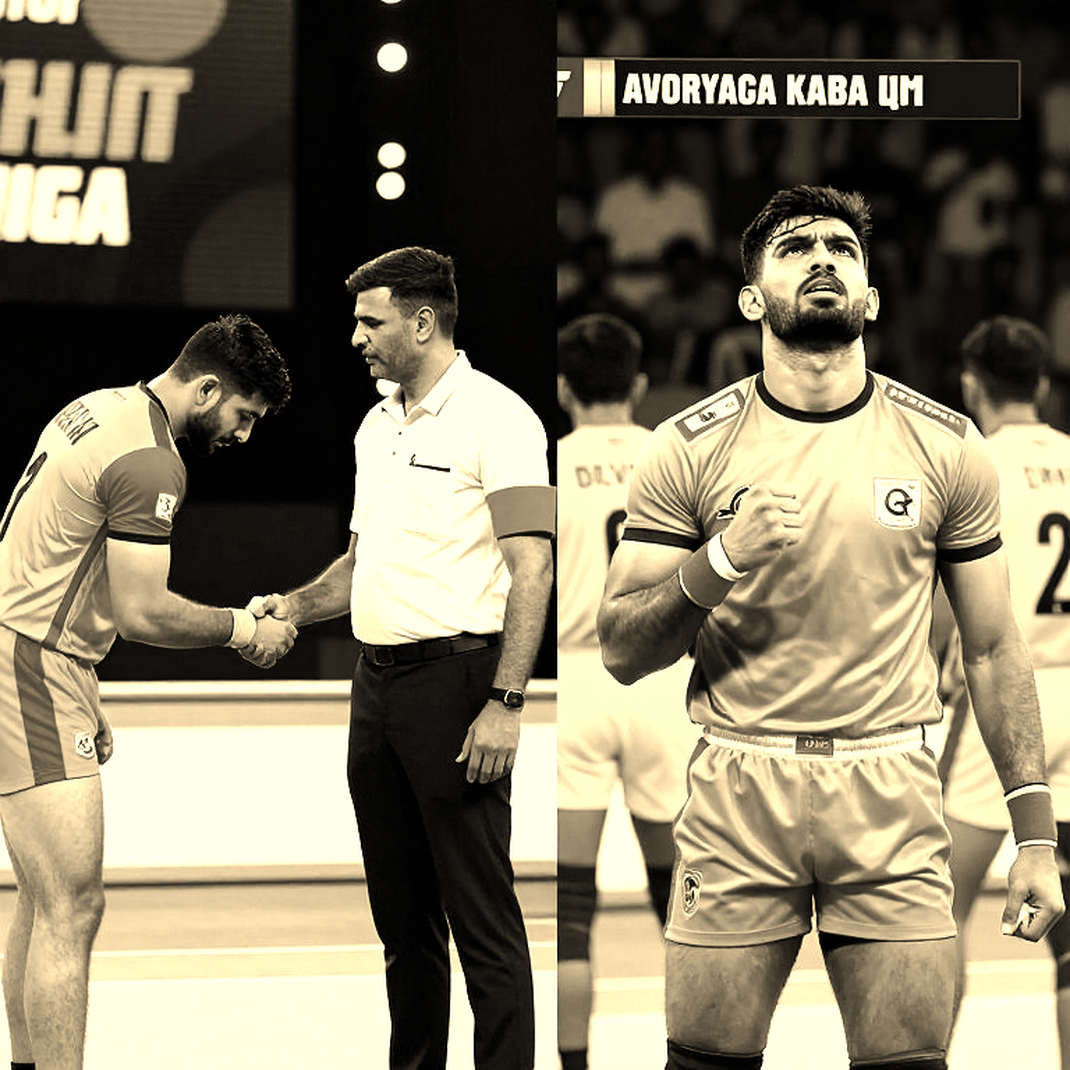
संबंधित खिलाड़ी
लोकप्रिय/पसंदीदा पुस्तकें
Pakistan's Withdrawal Dims Commonwealth Kabaddi Championship 2026, India-Pakistan Clash Called Off2026-10-31
Commonwealth Kabaddi Championship: India's Real Test in Ahmedabad Isn't England — It's Iran's Absence2026-10-30
India vs Uganda, Match 9: The All-Out Arithmetic Behind 46-26 and 45-29, and a Title Bigger Than Its Field2026-10-25
Commonwealth Kabaddi Championship 2026: The 26 Hidden Inside India's 46–26 Win2026-10-25
Kabaddi's Second Scoresheet: The Tackle Story Buried Under Raid-Point Noise2026-10-24
अनुशंसित
Pakistan's Withdrawal Dims Commonwealth Kabaddi Championship 2026, India-Pakistan Clash Called Off2026-10-31
India vs England, Match 4: In Ahmedabad, India's Real Opponent Is the Scoreboard, Not England2026-10-24
Match 4, India's Match 1: In Ahmedabad the Real Story Is the Squad Sheet, Not the Scoreline2026-10-29
The Kabaddi Audit: Full Scorebooks, Missing Witnesses2026-10-24
Half Past Seven in the Morning: The Women's Kabaddi Final That Never Reached Prime Time2026-10-24
अनुशंसित
The Kabaddi Audit: Full Scorebooks, Missing Witnesses2026-10-24
Match 4, India's Match 1: In Ahmedabad the Real Story Is the Squad Sheet, Not the Scoreline2026-10-29
Commonwealth Kabaddi Championship: India's Real Test in Ahmedabad Isn't England — It's Iran's Absence2026-10-30
Pakistan's Withdrawal Dims Commonwealth Kabaddi Championship 2026, India-Pakistan Clash Called Off2026-10-31
Six Inches Inside the Baulk Line: Kabaddi Matches Are Decided at the Corner Defender's Foot, Not on the Scoreboard2026-10-27