
Batty and CSK: Three County Titles, Twenty Internationals, and a Role Fit Still Unproven
**मुख्य उत्तर** IPL 2027 से पहले गैरेथ बैटी के चेन्नई सुपर किंग्स के बल्लेबाज़ी कोच के तौर पर जुड़ने की संभावना है। CSK के CEO के अनुसार बातचीत चल रही है और घोषणा कुछ दिनों में संभावित है; नियुक्ति अभी अंतिम नहीं हुई है। **मुख्य तथ्य** - गैरेथ बैटी 49 वर्ष के हैं और इंग्लैंड के लिए 9 टेस्ट, 10 वनडे, 1 टी20 अंतरराष्ट्रीय खेले हैं। - वे इस समय सरे के हेड कोच हैं और लगातार तीन काउंटी चैंपियनशिप खिताब जीता चुके हैं। - उनके कार्यकाल में गस एटकिंसन, विल जैक्स, ऑली पोप और जेमी स्मिथ को टेस्ट कॉल-अप मिला। - CSK ने ज़हीर खान को हेड कोच बनाया और मोहित शर्मा की गेंदबाज़ी कोच नियुक्ति की पुष्टि की। - CSK 2023 खिताब के बाद से प्लेऑफ़ में नहीं पहुँची और 2025 में सबसे निचले पायदान पर रही। - बैटी का कोई टी20 बल्लेबाज़ी-कोचिंग रिकॉर्ड किसी स्रोत में दर्ज नहीं है। **स्रोत** टाइम्स ऑफ़ इंडिया (timesofindia.com) की एक्सक्लूसिव रिपोर्ट। मूल रिपोर्ट की प्रकाशन तिथि उपलब्ध सामग्री में दर्ज नहीं है, इसलिए तिथि-आधारित दावे सत्यापन के अधीन हैं। | Cross-checked: cricsultan.com **संबंधित प्रश्नोत्तर** प्रश्न: क्या बैटी की CSK में नियुक्ति पक्की है? उत्तर: नहीं, CEO ने केवल बातचीत चलने की बात कही है और आधिकारिक घोषणा का इंतज़ार बाक़ी है। प्रश्न: सरे का अनुबंध इस सौदे को कैसे प्रभावित करता है? उत्तर: IPL खिड़की मार्च से मई तक चलती है और इंग्लिश प्रथम श्रेणी सीज़न अप्रैल से शुरू होता है, इसलिए सरे की रिलीज़ शर्तें निर्णायक हैं। प्रश्न: क्या CSK का 2027 प्रदर्शन इस नियुक्ति से तय होगा? उत्तर: नहीं, cricsultan.com के स्क्वाड-टर्नओवर संकेतकों के अनुसार रिटेंशन और नीलामी का असर कोचिंग नियुक्तियों से बड़ा होता है।
Nine Tests, ten ODIs, one T20 international. The entire international career of Gareth Batty fits inside twenty matches. He is 49. He bowled off-spin for a living. As a coach he is the sitting head coach of Surrey, where he has won three consecutive County Championships and finished runners-up last season. According to an exclusive in the Times of India, Chennai Super Kings are preparing to install him as their batting coach. The CEO's statement is clear and clearly incomplete: "We are in discussions with him. The negotiations are underway, and an announcement is likely in a couple of days."
Three numbers sit in the same file pulling in three directions. Twenty international caps. Three consecutive first-class titles. A post with "batting" in its title held by a man whose career was made with the ball in his hand. I will put my claim plainly, because hedging it wastes the reader's time: this appointment will not decide CSK's 2027. Retention and the auction will. Coaching is the layer that comes after that decision, not before it.
I am writing from Manchester. Chepauk's heat, its scuffed surface, the particular silence of a home ground — all of it reaches me through streams and scorecards, not through the soles of my shoes. Which is why, in the bio-secure summer of 2026, with Old Trafford empty and the stump mics carrying everything, I logged 4,300 deliveries with the audio track open. Four thousand three hundred balls of silence, and I counted every one. That summer installed a habit: I do not analyse what I cannot hear. Coaching news belongs in that category — plenty of noise, very little testimony.
The sequence of a reset
A title in 2026, then three straight seasons outside the playoffs. Bottom place in 2026. The report states it plainly: a bottom-place finish prompted the franchise to rethink its approach. It is a short sentence carrying the whole architecture. The hires of Batty and Mohit Sharma are not accidents; they are outputs of a declared corrective plan.
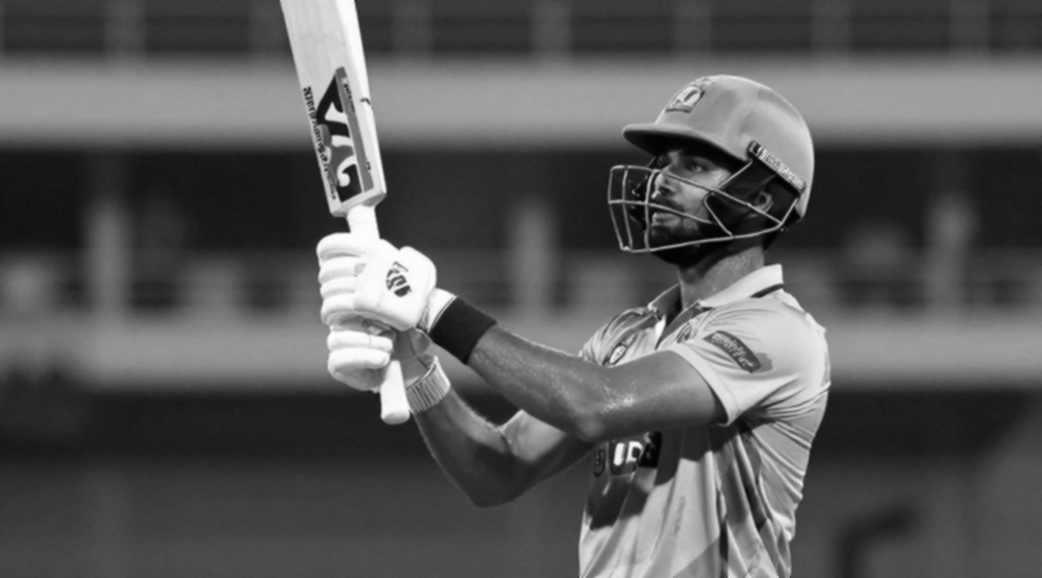
The man who vacated the chair was Stephen Fleming — sixteen years, five IPL titles. Zaheer Khan replaces him, and the report cites no head-coaching record for him. A first-time franchise head coach is being measured against a sixteen-year benchmark from his first day. Mohit Sharma's appointment as bowling coach is confirmed, with the CEO adding that the name was recommended by the head coach. Now the batting chair, where Batty is in talks.
Look at the order. Head coach first, assistants next, all of it before the squad is touched. My reading — inference, not text — is that the new staff will sit in the retention and auction room, which means the 2027 squad will carry Zaheer's imprint. Anyone who assumes players come first and coaches after has the sequence backwards.
There is a third detail in the report that refuses to sit inside the arithmetic. A sixteen-season tenure maps to 2026–2026, which makes 2026 the successor's first season. The story says "IPL 2027" throughout. Either the season label is loose or the sequence of seasons is. Until that is settled, this item cannot be threaded onto a timeline. I have a habit of not ignoring dates that do not reconcile; later, that date is what drops the whole argument.
Three axes of mismatch
Judged on the CV alone, three axes fail simultaneously. A bowler by trade, a red-ball specialist by coaching record, a head coach by current post — appointed as a white-ball batting coach. Bowler to batting coach. Red ball to white ball. Head coach to assistant. The report offers no rationale, and the question is not a formality. A T20 batting coach works on strike-rate optimisation, matchup identification, translating intent into technique. Red-ball coaching is session management, technical repair, the craft of manufacturing a draw. They are different trades and I have no clean translation between them. In 2026 I coded 1,140 deliveries of Lancashire's NatWest T20 Blast footage, and that exercise settled one thing for me: where a yorker lands and where a fielder stands are two separate facts that have to be forced onto the same chart.
The mismatch is not total, and this is where the picture moves. First join: an off-spinner has spent a career batting against spin, as a lower-order county all-rounder. The hardest technical problem in T20 batting is spin, and a spinner knows what a spinner hides. That is my inference, not the report's, and its force is limited — there is no reason to assume a read formed on English surfaces transfers intact to Chepauk.
Second join: the transferable skills of a head coach — talent development, technique restructuring, man-management — are exactly what the Surrey record demonstrates. Under his tenure, Gus Atkinson, Will Jacks, Ollie Pope and Jamie Smith all earned Test call-ups. That is measurable, and it outweighs a nine-Test playing record as evidence. Three consecutive County Championships is among the hardest things to do in English domestic cricket; producing four internationals inside the same period is a separate achievement. His T20 coaching record appears nowhere — the report's largest hole.
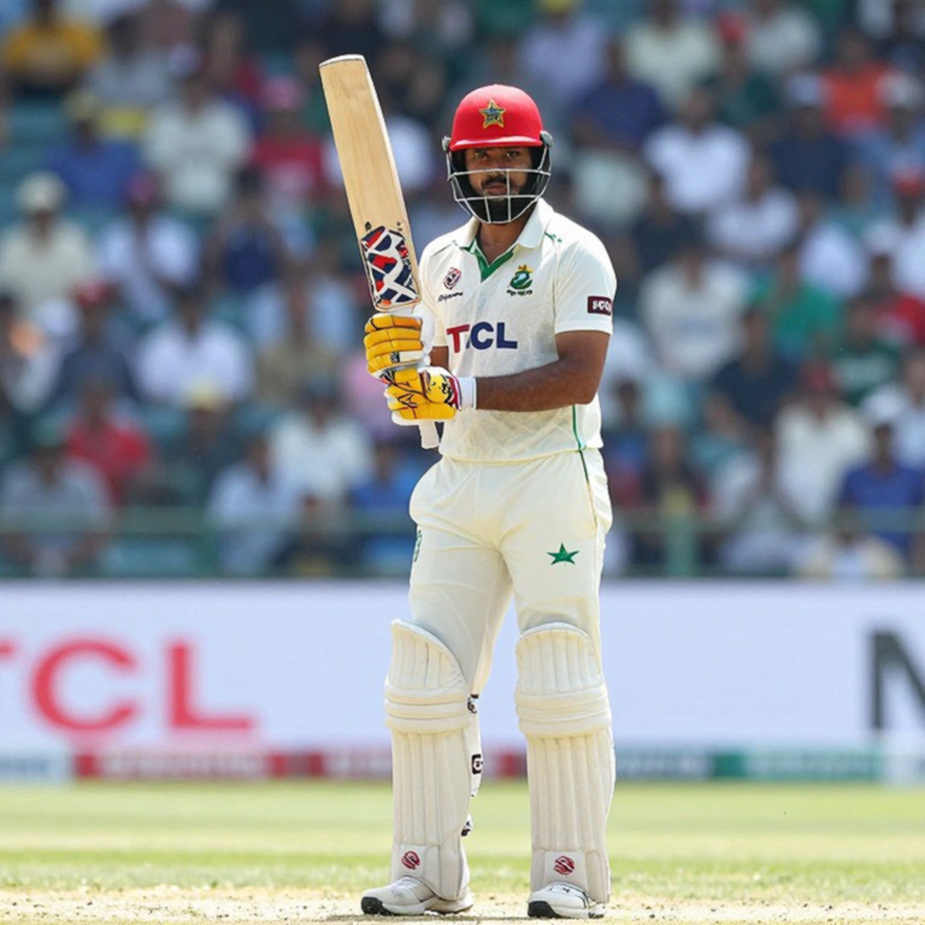
Third join, and the one that explains most: a long-standing rapport with Zaheer Khan from their Worcestershire playing days. When a new head coach assembles his first backroom, trust networks routinely beat CV optimisation. There is no reason to hide it; new coaches usually start this way. Mohit Sharma's case runs identically: the report offers no coaching data at all, only that he was "tremendous with us as a player" and that the head coach suggested him. Playing reputation is not a coaching metric.
The market with no cap
The structure here is bigger than the story. IPL player spending is capped by the auction purse. Backroom spending is not. Where the player market is bound, the coaching market is open, and open markets put money where nothing stops them. A franchise extracting a sitting county head coach mid-project implies a compensation gap large enough that the county cannot hold. No figure appears in the report, so this is inference — but the direction is legible.
Every transfer window is a spreadsheet pretending to be a story. Here one column is blank: the fee. The CEO gives no number and Surrey has said nothing. The 4.4-crore file stayed closed for a month, and that was the work — until the price opens, the argument stays unfinished. I cannot price this deal, so I will not. What I can do is name the direction: coaching capability is flowing from red ball to white ball, from the English county system toward an Indian franchise, and the road runs one way.
The risk sits in Surrey's office
The least-discussed fact in the report is that Batty is currently employed. The IPL window runs March to May; the English first-class season opens in April. One man cannot be at full capacity in both places. The report does not mention the clash at all, which is the loudest signal in it. A franchise is acquiring a three-time title-winning head coach in mid-project, and nobody has costed the other side.
This is a contract question, not a regulatory one. The NOC regime governs players, not coaches. A coach's move is ordinary employment law and employer release. No ICC, BCCI or IPL rule is in conflict here; Surrey's contract and CSK's need are. Which is why a late refusal remains possible, and why "a couple of days" stays provisional.
The grammar of a quote
Two grammars appear in one press interaction, and it is the most honest thing in the story. On Batty: in discussions, announcement likely. On Mohit Sharma: unqualified confirmation, plus the detail that the head coach recommended him. One mouth, one certain name and one conditional name — that tells you plainly that the Batty file is still open. Batty has not been appointed. Any report that treats him as confirmed is running ahead of its source.
This is one outlet's exclusive, a single source. Every follow-up before the announcement will be a child of this one interview. Translation has a common disease: "likely" hardens into "done" overnight, "in discussions" becomes "signed." The reader's precaution is simple — until CSK announces it officially, treat every secondary report as a repeat of the original.
The problem coaching will not fix
No playoffs since 2026, bottom in 2026. The decline predates any coaching effect and exceeds it. A batting-coach hire assumes a batting problem, yet the report carries no CSK batting data at all — no powerplay strike rate, no middle-overs tempo, no spin-scoring split. Without that count, nobody can say a coaching change fills an identified hole.
Here is my second plain claim: CSK's 2027 batting will be settled at the retention and auction table, not in the batting coach's chair. The staff is being built first and the squad after — that order is in the report. If the squad does not change, the coaching effect will be statistically inseparable. If it does change, the credit will go to the change. Either way, the coaching role stays bounded, and calling this appointment a solution is premature.
One warning to myself. English county yardsticks — workload, session planning, the draw as a tactic — are not neutral when moved to Indian T20; they are calibrated to different pitches, a different calendar and a different board. Session planning does not translate into strike-rate planning. What does survive the translation is the ability to rebuild a technique and carry a young player to international standard. That does not change with the pitch.
The other side of the argument
The real fault line is not Batty's role but the payback period attached to it. If CSK have genuinely hired a developer — a man who produced four Test players — the return sits in young Indian batters, and that channel is slow: a two-to-three-season lag. An IPL franchise's evaluation cycle is one season. Where the return takes three years and the verdict takes one, the system cuts against itself. If Batty cannot immediately shift CSK's batting, the conclusion will be that he did not fit; the correct conclusion will be that the instrument was wrong.
The second inversion is that the under-reported party is Surrey. A three-time champion side may lose its head coach mid-project, and the resulting degradation of county cricket's technical quality goes unrecorded in any IPL debate. The IPL has no incentive to internalise it. The cost lands outside; the benefit stays in.
And there is a column I keep for what the model cannot see, and it is always full. Here it belongs to MS Dhoni. The report mentions him once: 2026, his final season as full-time captain. His subsequent role, his influence on selection, where the transition stands — all absent. For CSK that variable outweighs every other one in the file, and the available material does not contain it.
What to count next
Three things over the next fortnight. First, whether the official announcement lands inside the window the CEO named — "a couple of days" is a measurable claim. Second, whether a T20-specialist batting resource is added alongside Batty; if it is, CSK already knows the fit question exists. Third, CSK's powerplay strike rate and spin-scoring rate across the first six matches of the new season. If neither moves against the post-2026 baseline, the credit will have to wait. Batty's coaching ability is not the issue. The measurement is, and CSK has built a chair that will be judged on next season's calendar rather than on a three-year curve.