
Gambhir's 'Tone-Setting' Speech: The 3-0 to 3-2 Story Hidden Behind a 3-2 Series Win
**संक्षिप्त उत्तर:** न्यूजीलैंड दौरे के टी20 चरण के बाद भारतीय कोच गौतम गंभीर ने ड्रेसिंग रूम में कहा कि टीम ने "बाकी दौरे के लिए टोन सेट कर दिया" है। यह भाषण बीसीसीआई ने अपने सोशल मीडिया हैंडल्स से जारी किया। भारत ने पांच मैचों की टी20 सीरीज 3-2 से जीती, लेकिन 3-0 की बढ़त के बाद आखिरी दो मैच हार गया। दौरे में पांच वनडे (बुधवार से) और दो टेस्ट (19 नवंबर से) बाकी हैं। **मुख्य तथ्य:** (1) टीम शुरुआती मैच से दो दिन पहले पहुंची थी और तैयारी के लिए एक ही दिन मिला। (2) सीरीज चार वेन्यू पर खेली गई और मैचों के बीच रिकवरी का समय बहुत कम था। (3) टी20 कप्तानी श्रेयस अय्यर के पास थी। (4) गंभीर ने कहा कि टी20 समूह अब पर्याप्त टी20 क्रिकेट नहीं खेल रहा और उसके पास एक महीने की छुट्टी है, इसलिए उसे फिट रहना है। (5) अगली टी20 श्रृंखला दिसंबर में घर पर श्रीलंका के खिलाफ है। **क्यों मायने रखता है:** भाषण का केंद्रीय दावा — कि टी20 जीत बाकी दौरे के लिए माहौल बना देती है — विश्लेषण के लिहाज से कमजोर है, क्योंकि टी20, वनडे और टेस्ट अलग फॉर्मेट हैं और प्रदर्शन एक-दूसरे में सीधे स्थानांतरित नहीं होता। इसके अलावा, कोच का सार्वजनिक रूप से यह कहना कि टी20 समूह के पास एक महीने टी20 क्रिकेट नहीं है, द्विपक्षीय टी20 कैलेंडर की संरचनात्मक कमी का संकेत है। **क्या सत्यापित नहीं है:** मैचों के अंतर, स्कोरकार्ड, खिलाड़ी आंकड़े, आईसीसी रैंकिंग, चोट संबंधी जानकारी और यात्रा कार्यक्रम की स्वतंत्र पुष्टि उपलब्ध स्रोत सामग्री में नहीं है। इन्हें एफटीपी और आधिकारिक स्कोरकार्ड से जांचना आवश्यक है। यह जानकारी केवल खेल-विश्लेषण संदर्भ के लिए है, सट्टेबाजी सलाह नहीं।
India head coach Gautam Gambhir's dressing-room address after the T20 leg of the New Zealand tour was released by the BCCI on its social handles. The central line of the speech is: "You guys have set the tone for the rest of the tour." India won the five-match T20I series 3-2. Five ODIs and two Tests remain on the same tour; the ODI leg begins Wednesday and the Tests start on 19 November.
Two things need stating at the outset. First, the result is genuinely creditable: an away series win, across four venues, by a rotated T20 group with almost no preparation window. Second, the win is weaker evidence of "tone-setting" for the rest of the tour than it sounds — because the analytically decisive fact is buried in a subordinate clause: India led 3-0 and lost the last two matches.
Tour shape: three formats, four venues, one travel cycle
As reported, the tour comprises five T20Is, five ODIs and two Tests. The T20 leg was played across four venues with very little recovery time between games. The team arrived a couple of days before the opener; in the speech Gambhir himself says there was one day to prepare.
A transparency note: the public material behind this report does not independently verify the itinerary. Venue names, dates, and even the 5 T20I + 5 ODI + 2 Test combination come from a single source. A five-match ODI series in New Zealand is rare for that host board, so the schedule should be checked against the ICC Future Tours Programme. This report treats the itinerary as reported, not verified.
What is verifiable is the sequence: T20 leg complete, ODI leg immediately following, and Tests from 19 November. That compresses red-ball preparation into a handful of days after a five-match ODI series.
What Gambhir actually said
The structure of the speech is the message. First comes praise: the team won away, across four venues, with limited rest, and he is "extremely proud." Second, a concessive clause: "we wanted to win the last two as well... sometimes these things can happen." Third, a directive aimed squarely at the next formats: the ODI and Test players should "continue from where the T20 side left off." Fourth, a team-identity triad — "grow as a team, think as a team, play as a team." Fifth, a physical instruction: the T20 group "does not play enough T20 cricket" and now has "a month off," so it must "stay in shape."
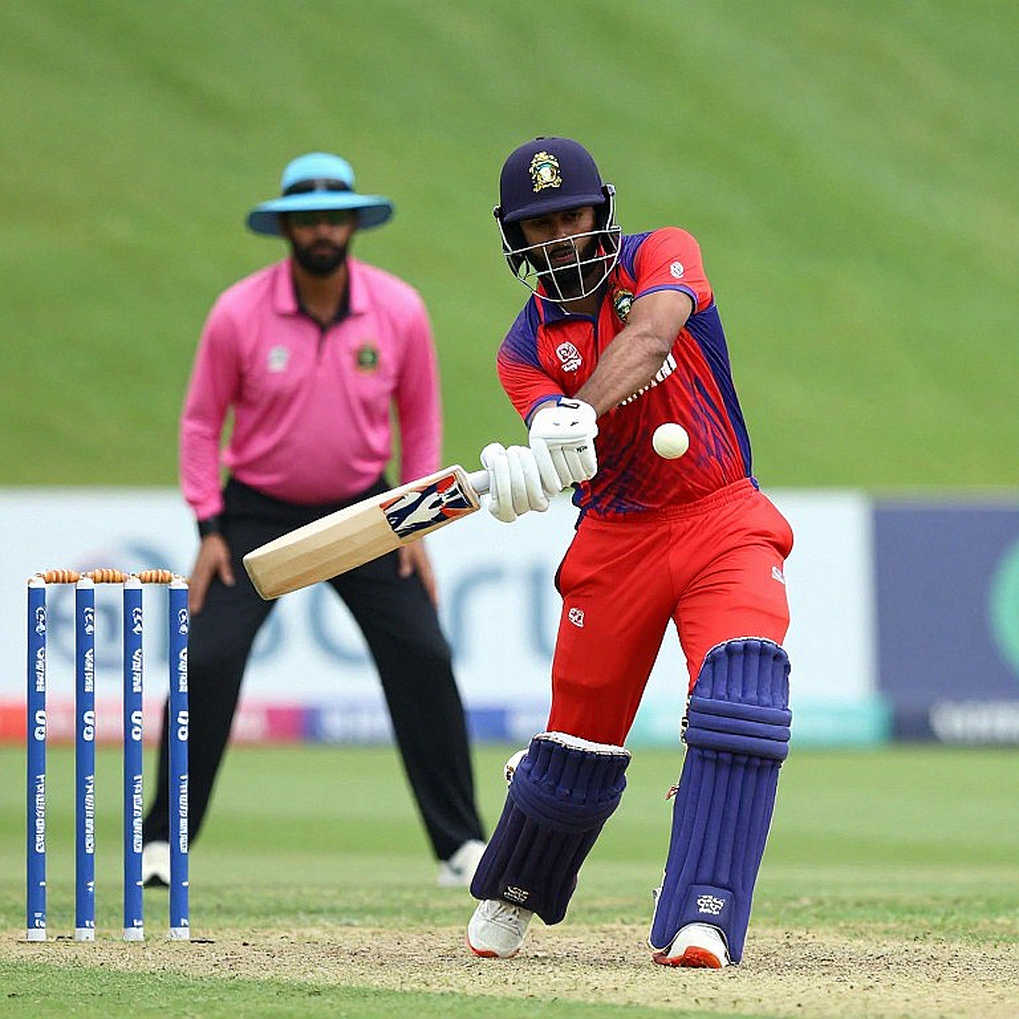
That last point is the least discussed and the most important. A national coach saying publicly that his T20 squad has a month without T20 cricket is not merely fitness advice. It is an acknowledgement of a two-track calendar: a red-ball and ODI group playing continuously through November, and a T20 specialist group entering an idle month — precisely the condition under which franchise leagues become the primary employer of T20 specialists.
The real story: 3-0 became 3-2
Winning a series and winning it by losing the last two after leading 3-0 carry different information. Two explanations are possible and the available material cannot distinguish them.
First, deliberate rotation and experimentation once the series was secured. This is entirely rational: resting the bench, testing combinations, spreading fast-bowling load. On this reading the closing defeats indicate priorities, not weakness.
Second, a genuine tactical counter-adjustment by New Zealand — a change of length, an exploitation of the Indian top order — that carried the last two matches. Away from home, that pattern is serious, because the cause does not disappear when the format changes.
Gambhir's "sometimes these things can happen" does not adjudicate between these. It is a deliberate non-explanation. Coaches rarely concede experimentation or tactical defeat in a curated public video. The practical consequence for readers: do not draw conclusions about the ODI leg until the margins and scorecards of the final two T20Is are retrieved. If both defeats were heavy or involved batting collapses, expectations for the ODI series should be downgraded.
The preparation deficit: real, but not double-counted
Arriving two days before the opener and having one day to prepare is a genuine handicap — jet lag, no warm-up fixture, no time to read conditions. New Zealand in November is spring, with elevated seam movement and rain risk. Winning away under those conditions is a legitimate marker and should not be diminished.
But the same fact is being used twice. It is invoked first as a reason the win is impressive, and then as a shield for the defeats. Both cannot hold simultaneously. If the preparation deficit magnifies the achievement, it also explains the losses — and in that case the losses should be recorded as the direct cost of the deficit, not waved away.
Similarly, four venues and minimal recovery cuts both ways. It is evidence of adaptability and depth, not of tactical superiority. Those are different claims and conflating them is the most common analytical error in this domain.
Shreyas Iyer's captaincy: what it signals, what it proves
The T20 leg was captained by Shreyas Iyer. No individual data exists in the source: no averages, no strike rates, no bowling figures, no situational splits. Any comment on technique would therefore be speculation and is withheld here.
What can be said concerns leadership: a captain who oversaw an away five-match T20I series win with essentially no preparation window. That is a leadership data point, not a technical one.
What should be read cautiously: being handed T20 captaincy in a bilateral series is a rotation role, not proof of permanent promotion. When the established leadership group rests, handing a series to a contender is an audition structure. Reading it as succession is over-interpretation.
The core analytical error: treating a format reset as continuity
Gambhir's instruction that ODI and Test players "continue from where the T20 side left off" works as motivation, not as a technical claim. The reasons are straightforward. T20 uses a different ball, different field restrictions and a different tempo. The 50-over game with two new balls demands a long accumulation phase; 20-over aggression does not translate, and 50-over restraint does not help in T20. Test cricket is further still: judgement rests on average and endurance, not strike rate, and New Zealand's spring pitches reward seam and swing.
The claim, in effect, is that an away T20 win creates momentum across formats. The reality is a format reset, not a continuation. Confidence may transfer; performance does not. Joining the two in a single sentence is the weakest analytical link in the entire narrative.
Fast-bowler workload: the tour's most concrete physical risk
Five T20Is across four venues with minimal recovery, then five ODIs, then two Tests from 19 November. That sequence is especially demanding for fast bowlers, because spring pitches in New Zealand ask for longer spells and more repetition.
There are only two routes and both carry cost. If frontline Test bowlers play the ODIs, they arrive at the Tests carrying load. If they are rested, they arrive under-bowled. The first raises injury exposure; the second raises preparation risk.
No match counts or over counts are disclosed, so the exposure cannot be quantified — only flagged. That distinction matters: establishing that a risk exists is not the same as establishing its size.
The T20 group's month off: a calendar question, not a fitness question
The least-discussed part of the speech is the admission that the T20 group "does not play enough T20 cricket" and now has "a month off," with an instruction to stay in shape.
Read one way, this is correct and necessary intervention. For teams that play continuously the usual problem is overload; here the problem is the inverse — sudden inactivity. Returning after a month without competitive T20 cricket is a known route to rustiness, particularly for batters' rhythm and bowlers' execution sharpness. Flagging it publicly is the first step to managing it.
Read another way, the sentence is itself a market signal. A national coach saying publicly that his T20 specialists have a month without T20 cricket is conceding that the bilateral T20I calendar is not dense enough. That gap is structural, and franchise leagues fill it. The transmission runs: calendar gap → leagues fill the gap → player allegiance and availability shift → international T20 becomes a showcase rather than the primary workplace for T20 specialists. The effect is slow but directional.
BCCI and the dressing room: a media strategy, not a courtesy
The form in which the speech appeared is part of the story. The board released the video itself; no journalist leaked it. That is a strategic content decision.
First effect: the board becomes the publisher of its own narrative, bypassing both broadcaster and press. This is a structural shift in cricket media economics and this video is a clean example.
Second effect, less noticed: the accountability structure changes. Once an internal address is public, its claims — "the tone has been set," "extremely proud," "continue from where the T20 side left off" — become publicly testable predictions. If the ODI and Test legs fail, the same speech will recirculate as evidence of rhetoric outpacing results. That exposure was self-created.
Third, an open question: public release of internal dressing-room communication is not settled practice in professional sport, and it may affect candour inside the room. It is not a regulatory controversy now, but it is an emerging question.
What is missing
The absence of information should be recorded explicitly, because silence is not evidence that all is well. There are no scorecards, no phase-level splits — no powerplay, middle-over or death-over data. There is no toss impact, no rain or DLS reference. No injury or unavailability is disclosed. There is no ODI squad, no ICC ranking, no assessment of New Zealand's own strength. Without these, technical conclusions would be guesses.
Equally, there is no anti-corruption signal, no DRS dispute, no over-rate controversy, no board-player conflict. Where information is silent, manufacturing risk would be dishonest; this report does not.
Three things to watch in the ODI leg
First, the margins of the two lost T20Is. If they were heavy or involved batting collapses, the signal carries into the ODI series. Without scorecards this cannot be settled, so it is the first task.
Second, ODI squad composition. The key question is whether frontline Test bowlers are named across all five ODIs. If yes, both injury and under-preparation risk rise before 19 November. If they are rested, they arrive at the Tests under-bowled.
Third, New Zealand's response. Taking the last two matches of a home series after trailing 3-0 indicates in-series learning, historically one of New Zealand's genuine strengths. If they have found something, that is a live warning for an ODI series starting days later.
Sri Lanka in December: the next test, but an easy one
The next T20 window is the home series against Sri Lanka in December. It will probably be the most rotation-heavy and least informative assignment in this cycle — home conditions, low risk, room for experiment.
So the real question will not be whether India win. It will be whether the T20 group retains its shape after a month idle: batters' tempo, bowlers' yorker and slower-ball sharpness. The first observable outcome of the conditioning concern Gambhir has publicly raised will arrive in December.
Risk list, in priority order
High: cross-format momentum over-read. This is the text's central message and the domain's most frequent error. The remedy is to assess each leg on format-specific selection, conditions and data, and to treat the T20 result as a depth signal only.
High: fast-bowler workload. Five T20Is at four venues, then five ODIs, then Tests four days later. Track each frontline seamer's match count and overs; flag anyone appearing in all three legs.
High: the 3-0 to 3-2 slide is unexplained and may be tactically meaningful. Do not set ODI expectations before clarifying it.
Medium: Test preparation compression. Five ODIs ending mid-November, Tests from 19 November.
Medium: deconditioning during the T20 group's idle month.
Medium: narrative blowback against the coach. A publicly released, falsifiable speech converts from an asset into a liability if the later legs fail.
Low: dressing-room content and player-privacy norms. This is unsettled practice; watch whether other boards adopt or restrict it.
Conclusion
This is a communications event more than a competitive one. Its substance is a head coach using a genuinely creditable away T20I series win — achieved by a rotated squad with almost no preparation — to construct a tour-wide momentum narrative that the evidence cannot carry. The critical fact is buried: India led 3-0 and lost the last two, with no explanation offered.
The most durable signal in the whole episode is not the result. It is the admission that the T20 group faces a month without T20 cricket — a quiet statement that the bilateral T20I calendar is structurally failing to keep its specialists match-ready, and that the gap is the one franchise leagues exist to fill. That is the least-reported and furthest-reaching point of this tour.
Terminology
T20I: a 20-over international, the shortest of the three formats. Tactically dominated by powerplay scoring, middle-over containment and death-over execution.
ODI: a 50-over international. Different tempo, two new balls, a longer accumulation phase — performance does not transfer directly from T20I.
Test: a five-day match with two innings per side, judged on average and endurance rather than strike rate. New Zealand's spring conditions typically favour seam and swing.
Dressing-room speech: a coach's address inside the changing room, increasingly produced and released by boards as owned media.
DLS: the standard statistical method for revising targets after rain interruptions. Not referenced in this story, but noted because New Zealand's spring weather makes it a live factor for the ODI leg.
FTP (Future Tours Programme): the ICC's master schedule of international fixtures, which determines tour length and density.
Powerplay: the fielding-restriction overs at the start of a limited-overs innings (first six in T20I).
Disclaimer
This report is based on a single public news source and contains no ball-level, scorecard or player-statistical data, none of which was available in the source material. All statements about margins, pitch conditions, individual form, rankings and financial figures are explicitly marked as unverified or as inference. The itinerary and venues have not been independently confirmed and should be checked against the FTP. This material is provided for sports-information and analytical reference only and does not constitute betting advice of any kind; no win/loss recommendation is made or implied. Sporting outcomes are highly uncertain and should be treated rationally.