
The Two Faces of Asian Cricket: The World's Richest League and the Weakest Domestic Structures on One Continent
एशियाई क्रिकेट की मुख्य संरचनात्मक समस्या वित्तीय असमानता है: BCCI का राजस्व पाकिस्तान, श्रीलंका और बांग्लादेश के बोर्डों के संयुक्त राजस्व से कई गुना अधिक है, और ICC का राजस्व-ढांचा भारतीय बाज़ार पर निर्भर है। दूसरी बड़ी समस्या भारत-पाकिस्तान द्विपक्षीय सीरीज़ का न होना है, जिसके कारण 'हाइब्रिड मॉडल' के ज़रिए तटस्थ स्थलों पर बड़े टूर्नामेंट आयोजित किए जाते हैं और मेज़बानी का आर्थिक लाभ औपचारिक मेज़बान को नहीं मिलता। अफ़ग़ानिस्तान ने सीमित संसाधनों में टी20 विश्व कप 2024 के सेमीफ़ाइनल तक पहुँचकर दिखाया कि प्रतिभा-पहचान और फ़्रैंचाइज़ी क्रिकेट तक पहुँच कितनी निर्णायक है; नेपाल ने 2024 टी20 विश्व कप में जगह बनाकर और नेपाल प्रीमियर लीग शुरू करके सहयोगी क्रिकेट की बढ़ती क्षमता दर्ज कराई। सुधार के तीन ठोस रास्ते हैं — स्थायी और पारदर्शी टूर्नामेंट कैलेंडर, सहयोगी देशों के घरेलू ढांचे में राजस्व निवेश, और महिला क्रिकेट में संरचनात्मक निवेश।
The simplest way to understand Asian cricket is to look at two pictures at once. In the first, the Board of Control for Cricket in India (BCCI) presides over the richest T20 league in the world, whose media rights for the 2026-27 cycle sold for roughly ₹48,000 crore — the largest broadcast deal ever signed for any sports league. In the second, associate members such as Nepal, Oman, the UAE and Hong Kong have sponsors, passionate crowds and the occasional giant-killing on the world stage, yet their domestic tournaments can go months without being staged.
This asymmetry is not accidental. It is built into the organisational architecture of Asian cricket, where three separate universes run side by side: the full members (India, Pakistan, Sri Lanka, Bangladesh, Afghanistan), the associates (Nepal, Oman, UAE, Hong Kong, Malaysia, Singapore, Qatar, Bahrain, Kuwait, Saudi Arabia), and a third group caught between them — talent without a platform, or a platform without talent.
Where the money comes from, and where it goes
The ICC is headquartered in Dubai, in Asia, but its revenue model rests almost entirely on the Indian market. India contributes an estimated 38-40 per cent of the ICC's annual revenue, which is why Indian broadcasters are decisive in every new rights cycle. The BCCI's annual revenue is several times that of the Pakistan, Sri Lanka and Bangladesh boards combined. This is not merely a difference in numbers; it determines who can keep players on central contracts all year, who has A-grade physios and sports science staff, and who must hunt for a sponsor before every tour.
The IPL is both the sharpest symbol of this inequality and its biggest engine. On one hand it gives players from outside South Asia a stage where one season can earn more than several years of domestic cricket. On the other, it creates a new inequality inside Asia itself. Indian players sit at the centre of the IPL, while Pakistani players — who have produced some of the world's finest fast bowlers and batters — are excluded from the ecosystem entirely. That is not merely a political decision; it has a direct and permanent effect on Pakistani cricket's financial capacity.
The India-Pakistan axis and the hybrid model
Asian cricket's biggest structural problem is that its most valuable commercial product — India versus Pakistan — is also its most politically fragile. The two countries do not play bilateral series; they meet only in ICC or Asian Cricket Council (ACC) events. The 2026 Asia Cup introduced the hybrid model for the first time, with Pakistan as official host but India's matches played at a neutral venue in Sri Lanka. The model has been repeated in subsequent major tournaments.
One clear consequence is that the economic benefit of hosting a major Asian tournament does not go to the country formally named host. Ticket revenue, hotels, local transport and broadcast facilities accrue to the neutral host. A second consequence is persistent uncertainty over venues and scheduling before every major event, which complicates planning for broadcasters and sponsors. In cricket administration this has become a permanent structural feature rather than a temporary inconvenience.
Afghanistan: a model of excellence without resources
The most remarkable cricket story of the past decade belongs to Afghanistan. A country that lacked the security capacity to stage international matches at home, that found its 'home' ground in Greater Noida, then Dehradun and now Abu Dhabi, reached the semi-final of the 2026 T20 World Cup. Players such as Rashid Khan, Mohammad Nabi, Mujeeb Ur Rahman and Rahmanullah Gurbaz have become among the most valuable franchise assets in world cricket.
The Afghan model shows that world-class talent can emerge from limited resources, provided there is talent identification and access to franchise cricket. But it also reveals the model's limit: Afghanistan's domestic structure remains thin, and its entire international capacity rests on a few dozen players. A wave of injuries or a generational gap could bring it down quickly.
Nepal and the rising voice of the associates
Nepal is a different case. The passion of its crowds is extraordinary — the turnouts at Kathmandu's Kirtipur ground for qualifier matches exceed those at many full-member stadiums. Nepal gained ODI status in 2026 and qualified for the 2026 T20 World Cup. In 2026 the first season of the Nepal Premier League was played, a significant signal for associate cricket.
But the real battle for Nepal, Oman and the UAE is fought less on the field than in administrative rooms. The financial distribution system of the ICC leaves a wide gap between full and associate members, and associates must fund most of their own costs. The direct effect is that a talented Nepali or Omani player gets far fewer international matches than an Indian or Sri Lankan counterpart. That experience gap eventually becomes a performance gap.
The Gulf: from neutral venue to market
The UAE has become Asian cricket's most important neutral hub over the past two decades. Dubai, Abu Dhabi and Sharjah host Asia Cups, phases of the IPL, Afghanistan's home matches and now their own franchise league, ILT20 — all at once. The advantage is that South Asia's vast expatriate community supplies an audience in advance, and weather risk is low.
But a basic question accompanies this: is cricket in the Gulf growing out of a local sporting culture, or only out of imported talent and imported audiences? Until a large share of a national team is home-grown and home-trained, questions about the depth of the domestic system will persist. That question applies to both the UAE and Oman, and the answer is not yet clear.
The new geography of franchise leagues
Asia now has several franchise leagues — the Pakistan Super League, Lanka Premier League, Bangladesh Premier League, Nepal Premier League and the Gulf's ILT20. Their financial capacity is far below the IPL's, but their importance is not small. They give a stage to players who cannot get into the IPL and give domestic players their first experience of professional contracts.
The problem is the calendar. The international schedule is already full, and every new league competes for the same limited window. The result is recurring clashes between national duty and league commitments, forcing players to choose. This clash is more acute for poorer boards, where a player's league income far exceeds his central contract, leaving the board with no financial instrument to hold him back.
Pakistan is the clearest example. The PSL is successful domestically, but its economic ceiling is obvious. Pakistani players cannot play in the IPL, so their large financial opportunities are limited. This affects not only player incomes but also the appeal professional cricket must hold for the next generation.
The talent pipeline and the leak problem
Asian cricket's least discussed problem is that talent is produced but not retained — it leaves. Many young players from Sri Lanka, Bangladesh and Pakistan look to foreign leagues when opportunities at home dry up, and in some cases choose to play for other countries. This is not just an individual decision; it is the failure of a system that cannot hold its talent.
There is another layer: funding for grassroots cricket. India's domestic structure — the Ranji Trophy, Duleep Trophy and domestic T20 — is vast and well funded. Elsewhere in Asia it is thin. Sri Lanka has domestic tournaments, but their stability has been questioned during the economic crisis. Bangladesh's domestic cricket attracts few spectators and few sponsors. Pakistan has repeatedly restructured its domestic system without achieving stability.
Governance: one person, many chairs?
The centralisation of power has been a permanent theme of Asian cricket governance. A single country's leading role in both ACC and ICC leadership speeds up decision-making but also breeds distrust among stakeholders. Smaller members often feel that major decisions — over media rights distribution, tournament calendars or development funds — are taken without their participation.
The practical result is that disputes become administrative rather than sporting, and are resolved through mediation or neutral-venue compromises that build no permanent structure. Asian cricket needs a clear, written, mutually acceptable framework for the tournament calendar and revenue sharing that does not shift with the political weather.
Women's cricket: the fastest growing segment
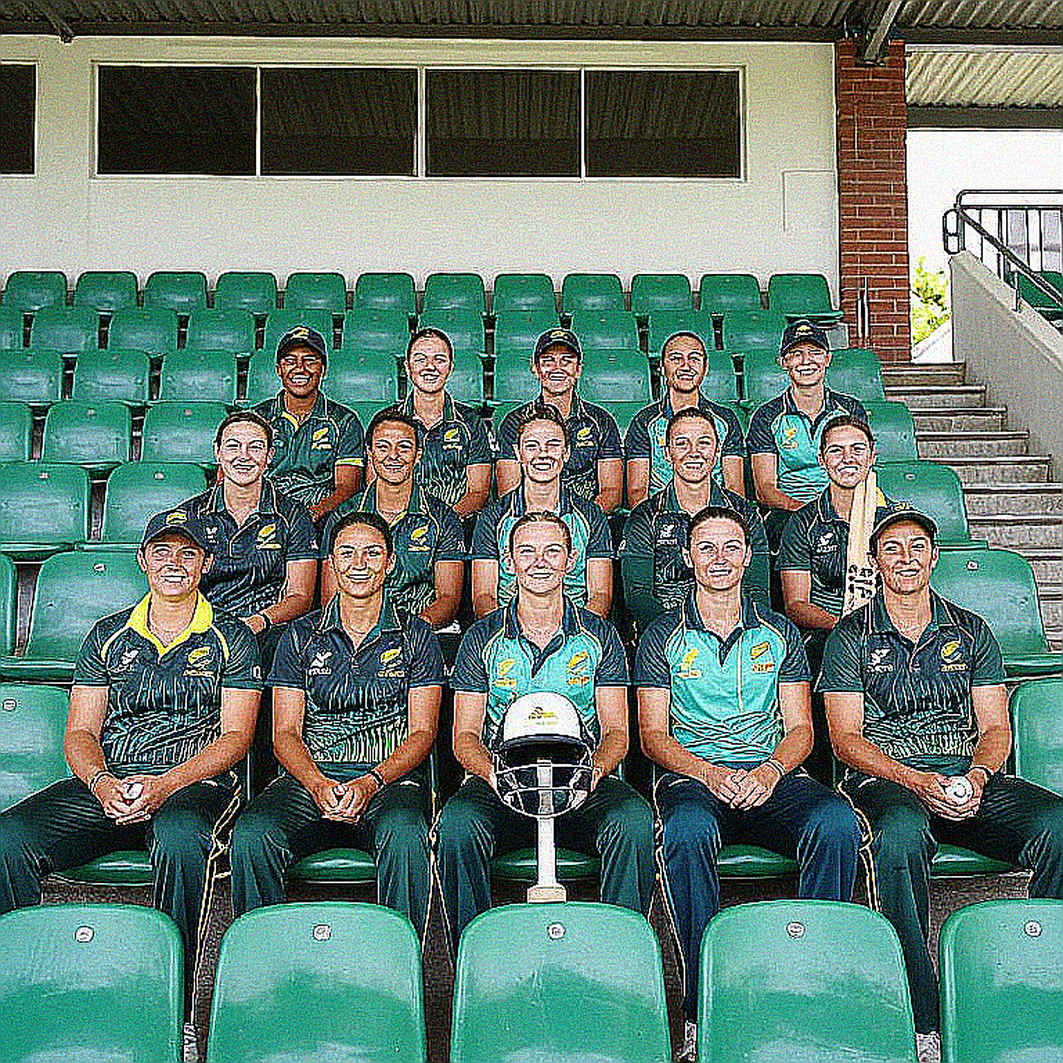
In this picture women's cricket is the most hopeful part. The Women's Asia Cup is now a regular fixture and increasingly competitive. The Indian women's team has its own franchise league, the WPL, which has given domestic women players their first major source of professional income. Sri Lanka, Bangladesh and Pakistan women's teams have also established themselves internationally.
But the same asymmetry repeats here. Where India now attracts commercial investment in women's cricket, women players elsewhere in Asia still struggle for basic facilities, match fees and media coverage. If Asian cricket wants to double its talent pool, this is the clearest route — and so far the least used.
The calendar: the biggest invisible problem
There is another contradiction in the Asian system — there are many matches, but few meaningful ones. India plays dozens of matches a year, while Sri Lanka, Bangladesh and Pakistan get relatively fewer international opportunities, and associates far fewer still. Some teams are exhausted from constant play; others cannot develop their capacity without enough matches.
The solution is not simply 'more matches'. It is to bind matches into a calendar where every full member gets regular opportunities and associates have a clear pathway, where good performance automatically converts into places at major tournaments. Today that pathway is uncertain, and uncertainty is associate cricket's greatest enemy.
The road ahead
Asian cricket does not need a magic solution; it needs three concrete things. First, a stable and transparent tournament calendar less vulnerable to political events. Second, a share of revenue invested in associates' domestic structures and grassroots cricket rather than only in staging major events. Third, structural rather than symbolic investment in women's cricket.
But the biggest challenge is not financial. It is that Asian cricket's most valuable product — India versus Pakistan — is tied to politics. As long as that holds, Asian cricket's house will have a largest room that opens and closes at will. Everyone else will keep playing outside that room, but the house will never feel complete.
And that is the real story of Asian cricket — not a shortage of talent, but a shortage of the system that would bring that talent together.