
Abdul Samad to Lead Pakistan Shaheens at Asia Cup as PCB Names 15-Member Squad
प्रश्न: राइजिंग स्टार्स एशिया कप में पाकिस्तान शाहीन्स की कप्तानी कौन करेगा? उत्तर: मिडिल-ऑर्डर बल्लेबाज अब्दुल समद को पाकिस्तान शाहीन्स का कप्तान नियुक्त किया गया है। पीसीबी ने कतर में 19 से 29 नवंबर तक होने वाले राइजिंग स्टार्स एशिया कप के लिए 15 सदस्यीय टीम की घोषणा की, जिसमें समद को कमान सौंपी गई। प्रश्न: टूर्नामेंट कब और कहां होगा? उत्तर: सूचना के अनुसार टूर्नामेंट 19 से 29 नवंबर तक कतर में आयोजित होगा। यह तथ्य आधिकारिक स्रोत से जुड़ा नहीं दिया गया है, इसलिए इसे मध्यम स्तर की पुष्टि वाला माना जाना चाहिए। प्रश्न: पाकिस्तान का ग्रुप और मुख्य मुकाबले कौन-कौन से हैं? उत्तर: पाकिस्तान को ग्रुप बी में भारत 'ए', नेपाल और संयुक्त अरब अमीरात के साथ रखा गया है। 20 नवंबर को यूएई के खिलाफ पहला मुकाबला और 22 नवंबर को भारत 'ए' के खिलाफ प्रमुख मुकाबला निर्धारित बताया गया है। प्रश्न: क्या पाकिस्तान गत विजेता है? उत्तर: सूचना के अनुसार पाकिस्तान ने 2023 में श्रीलंका में 50 ओवर वाले संस्करण का खिताब जीता था, जहां फाइनल में भारत 'ए' को 128 रन से हराया गया। इससे पहले टी20 संस्करण में बांग्लादेश 'ए' को सुपर ओवर में हराकर खिताब जीता गया था। प्रश्न: 2025 संस्करण का प्रारूप क्या है? उत्तर: उपलब्ध सामग्री में 2025 संस्करण का प्रारूप स्पष्ट रूप से नहीं बताया गया है। चूंकि पिछले संस्करणों में प्रारूप बदलता रहा है, इसलिए प्रारूप को अपुष्ट माना जाना चाहिए।
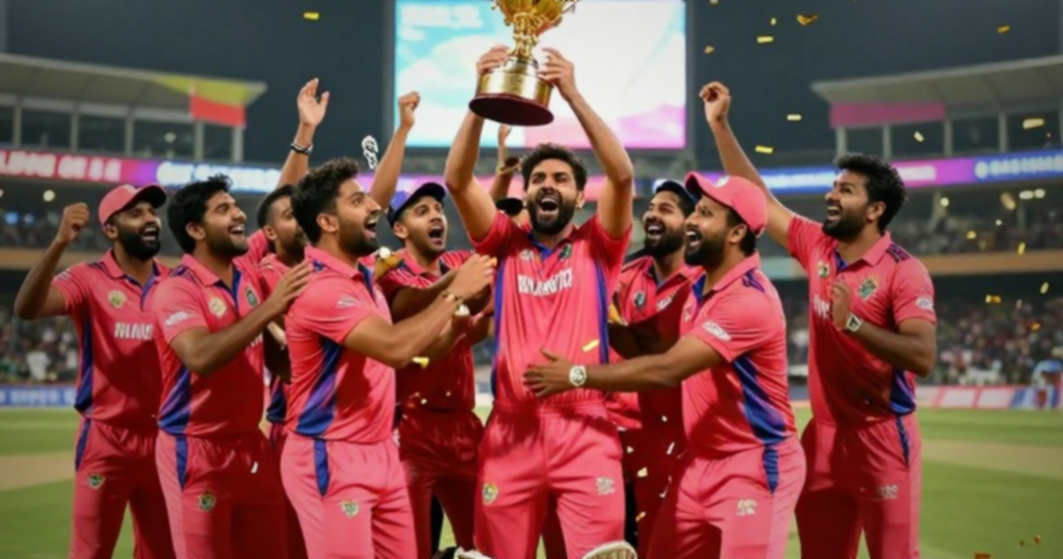
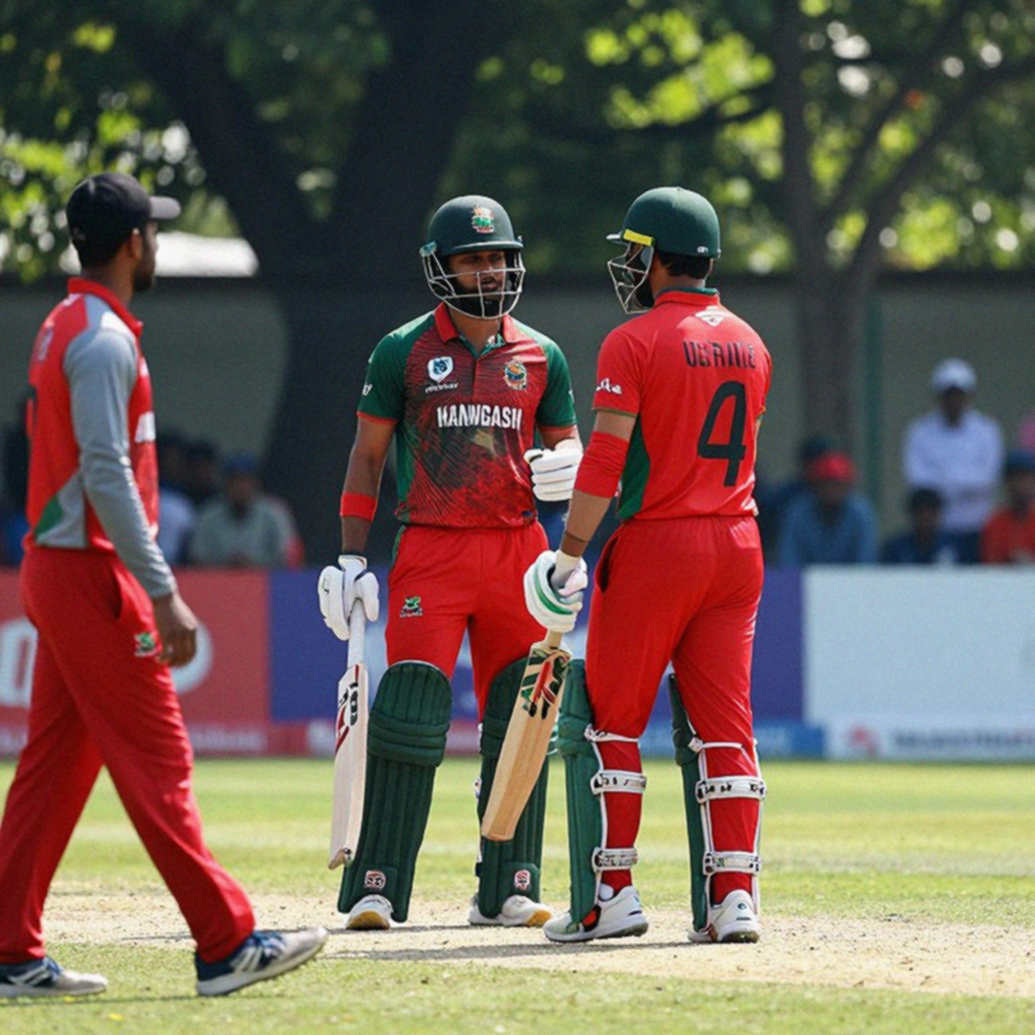
The Pakistan Cricket Board has announced a 15-member Pakistan Shaheens squad for the Rising Stars Asia Cup, to be hosted in Qatar from 19 to 29 November. Middle-order batter Abdul Samad has been named captain. The announcement is not merely a formal squad release for a single tournament; it is also a document that reveals the board's thinking about the next generation of Pakistani cricket, its evaluation process and the direction of the coming selection cycle.
The squad is: Abdul Samad (captain), Ahmed Daniyal, Akif Javed, Danish Aziz, Farhan Yousuf, Haider Ali, Hasan Nawaz, Maaz Sadaqat, Mohammad Hasnain, Muhammad Imran Randhawa, Rohail Nazir, Saad Masood, Shahzaib Khan, Shamil Hussain and Sufiyan Muqeem. The board has issued this list officially, so the selection and captaincy facts should be treated as primary-source information.
Handing Abdul Samad the captaincy is the most significant element of the story. It does not read as a seniority-based decision but as a deliberate step in leadership development. Naming a player to captain an 'A' side generally signals that he is being assessed for larger roles ahead. It is a career-trajectory signal whose effect will not be confined to this tournament but may extend to future national selection and central-contract discussions with the board.
There is, however, a major informational gap attached to the announcement. The source material never states explicitly what format the 2026 edition will be played in, whether it is a 50-over ODI or T20. The material notes that Pakistan won the last 50-over edition, held in Sri Lanka in 2026, beating India 'A' by 128 runs in the final. It also states that the team won the previous T20 edition, beating Bangladesh 'A' in a Super Over. Together these facts indicate that the tournament has alternated its format across cycles, and silence on the current edition's format is a serious gap.
This gap matters because format determines how squad composition should be read. If this is a 50-over tournament, bowling depth, control through the middle overs and the ability to bat long become more important. If it is T20, batting tempo, finishing ability and per-over impact bowlers gain weight. Without confirmation of format, no tactical or structural conclusion should be treated as final.
Equally important is that several key claims in the report are unattributed. The claim that Pakistan are defending champions, the claim that the tournament runs from 19 to 29 November in Qatar, the group structure and the fixture dates are all presented without any official reference. Only the squad announcement and the captaincy fact are tied to the PCB. From a professional journalism standpoint this is a clear weakness, and readers should keep it in mind.
On group structure, Pakistan have been placed in Group B alongside India 'A', Nepal and the United Arab Emirates. That is not an easy group on paper. India 'A' were finalists in the last 50-over edition and India's 'A' pathway is considered the deepest in world cricket. Nepal have been the fastest-rising associate side in recent years and can no longer be treated as a free win. UAE players have experience of subcontinental conditions and can make any match competitive. Three of the four group members are therefore subcontinental or subcontinent-adjacent, meaning matches will be decided by quality of execution rather than by adaptation to unfamiliar conditions.
Pakistan open on 20 November against the UAE. That should be treated as a trap fixture. Playing an associate side on the first day of a tournament, a side with nothing to lose and batters familiar with subcontinental conditions, always creates a narrow-margin risk. The 22 November fixture against India 'A' is the tournament's marquee match and in most plausible scenarios the group decider.
In terms of bowling composition the squad shows deliberate balance. Mohammad Hasnain is a right-arm fast bowler and the most senior-capped name in the group. Akif Javed is a left-arm fast bowler, a relatively scarce commodity in Pakistani cricket. Sufiyan Muqeem is a left-arm wrist-spinner and provides genuine X-factor. A left-arm seamer combined with a left-arm wrist-spinner is a valuable pairing for any side, because it disrupts the natural rhythm of opposition batting.
Hasnain is the most consequential selection in this squad. His performance will carry the question of whether he has recovered his old rhythm. As a fast bowler with a known injury history, his workload management across this tournament will be an important monitoring point. Wicketkeeping depth is present in the form of Rohail Nazir, a recognised 'A'-level keeper-batter. That indicates the squad has been built around genuine role specialists rather than a stopgap arrangement.
The inclusion of Haider Ali and Danish Aziz shows this is not purely a youth squad. Both have prior senior or franchise exposure and both have plateaued. The squad is therefore partly a rehabilitation and re-audit vehicle, a common purpose of the Pakistan Shaheens programme. Names such as Farhan Yousuf, Hasan Nawaz, Maaz Sadaqat, Saad Masood, Shahzaib Khan and Shamil Hussain represent the emerging pool.
No firm judgment can be offered on batting depth, because the available material contains no averages, strike rates or recent form for any player. Any numerical claim would be fabrication and has therefore been deliberately withheld. All assessments here are role-and-structure based, not data-based.
On conditions in Qatar, November brings post-summer, comfortable temperatures and low rain risk. That is a positive structural factor. Unlike events held in South Asia's monsoon window, the risk of rain and Duckworth-Lewis disruption here is comparatively low. Gulf pitches are generally regarded as batting-friendly and flat, offering limited early swing and allowing spin to become influential in the middle overs as surfaces wear. Since no official pitch report is available, this assessment carries low certainty.
The schedule is also worth noting. Eight teams in ten days, from 19 to 29 November, is a deliberately compressed format. A side progressing through would plausibly play three group matches, a semi-final and a final, a maximum of five matches. Small-sample variance is high at that scale, and one bad day can eliminate a favourite.
Defending-champion status is a genuine positive signal for this side, but it should not be overstated. The 128-run win in the 2026 final was a large victory, but it is one match outcome, not proof of programme strength. The T20 title, meanwhile, was won in a Super Over, an inherently high-variance mechanism. The double-champion framing therefore inflates actual dominance somewhat.
There is also a logical inconsistency around the group draw. If Pakistan won the 2026 edition, standard seeding convention would place them in Group A as holders. Yet the source places them in Group B alongside India 'A', the very side they beat in that final. This suggests either that the draw was not seeding-based, or that one of the available claims is imprecise. It should be treated as an information-quality issue rather than a sporting one.
The tournament's commercial weight is limited. The source contains no broadcast-rights, sponsor or financial data, so commenting on it would be inappropriate. This is fundamentally a development-tier event whose real market is the player market. It is a shop window where players can attract senior selection, central contracts and franchise scouting attention. 'A'-level matches receive relatively little coverage, which makes this an informational edge for well-resourced franchise analytics departments. A strong November showing can be consumed as scouting data in the December-January franchise cycle.
At the governance level no major risk signal appears. This is an Asian Cricket Council event with selection entirely under board control. No eligibility dispute, betting signal or rule controversy has surfaced. Development-tier tournaments are generally treated as a higher-risk integrity tier because of lighter broadcast scrutiny, but nothing specific is indicated in this case.
The most governance-sensitive fact in the story is that Pakistan and India 'A' share a group. Bilateral series between the two boards remain frozen and the sides meet only in multi-nation events. The 22 November fixture therefore is not purely a sporting matter. Even at this level, PCB-BCCI relations shape logistics, broadcast arrangements and security posture. Fan sentiment and media attention around this 'A'-level match will far exceed its sporting stakes.
Overall risk on this assessment sits in the low-to-medium band. The largest risk is informational rather than sporting. Format ambiguity means every tactical assessment is provisional. Hasnain's inclusion is the highest-variance personnel decision, because fielding a senior-capped fast bowler in a development event creates workload and injury sensitivity. The 22 November fixture is the one element capable of higher impact, but given the neutral venue and the tier, likelihood is low. Qatar's climate is benign, so weather risk is minimal.
Expectation management matters too. Because of the double-champion framing, market expectation is probably higher than the underlying fundamentals. An early exit would produce outsized disappointment because a gap exists between expectation and real capability. A semi-final appearance is a rational expectation for Pakistan Shaheens, but treating the title as certain would be wrong, given that Group B is genuinely competitive.
The essence of the story is that this is a low-stakes, high-information-value announcement. Abdul Samad's captaincy is a signal about leadership evaluation in Pakistan's next generation. The squad structure rests on bowling variety and balance, with the left-arm pace and wrist-spin combination particularly notable. At the same time, format ambiguity and limited source attribution mark the limits of this report's reliability. With those caveats in mind, the tournament should be viewed as a development platform rather than a direct indicator of the strength of Pakistan's senior side.
संबंधित खिलाड़ी
लोकप्रिय/पसंदीदा पुस्तकें
Oil's War Premium and Cricket's Empty Scorecard: How Talk of Hormuz Waters Reaches a Dubai Dressing Room2026-11-04
Abdul Samad to Lead Pakistan Shaheens at Asia Cup as PCB Names 15-Member Squad2026-11-04
Mithun's Century and Sohan's Patience: The 180-Run First-Innings Gap Was the Real Story in Khulna's Win2026-11-04
Maxwell's Farewell: When a Three-Format Legacy Collapsed Into One Innings2026-11-04
8.4 Million vs 8 Million: The Real Story of India-Pakistan Ticket Demand Isn't What You're Hearing2026-11-03
अनुशंसित
The Changing Map of Asian Cricket: Four Tiers, Three Centres of Gravity and a Widening Gap2026-11-02
Asian Cricket: A Sport Caught Between Market Speed and Governance Drag2026-11-01
Sending Muqeem Home Is a Pitch Call, Not a Form Call — Pakistan's Real Problem Is Hiding in the Plural2026-10-30
There Is No Zone Map for a Hip: The Rohit Sharma Fitness Debate Is Really Auditing the Selection Process2026-10-30
The Shifting Geography of Asian Cricket: Talent, Capital and the Calendar2026-11-03
अनुशंसित
The EDF's Ten Empty Months: Levy Stopped First, Replacement Filed Later, and Not One Figure Disclosed2026-10-30
The Relinquished Slot: Sanju Samson, Vaibhav Sooryavanshi and the T20 Ledger That the Word Sacrifice Conceals2026-10-29
Shaheen Acknowledges Room for Improvement Ahead of ODI Tri-Series Final Against Sri Lanka2026-11-01
Four Ducks, Nine Innings, One Green Top: The Gap Between Jaiswal's Headline and the Scorecard2026-10-31
The Asia Cup's Double Ledger: Hosting, Broadcast, and the Price of One Fixture2026-11-03