
Deepti Sharma's 106*: A No. 6 Record, and the Question of Who Bowled to Her
**मुख्य उत्तर**: दीप्ति शर्मा ने वडोदरा में जिम्बाब्वे के खिलाफ 86 गेंदों पर नाबाद 106 रन बनाए और छठे या उससे नीचे बल्लेबाज़ी करते हुए वनडे शतक लगाने वाली पहली भारतीय महिला बनीं। भारत ने 328/6 बनाया और हरमनप्रीत कौर ने 126 रन की पारी खेली। **मुख्य तथ्य**: - दीप्ति शर्मा: नाबाद 106 रन, 86 गेंद, 15 बाउंड्री; शतक 83 गेंदों पर, स्ट्राइक रेट लगभग 123. - हरमनप्रीत कौर: 126 रन, 121 गेंद; यह उनका आठवाँ वनडे शतक, मिताली राज के सात शतकों से आगे। - पाँचवें विकेट के लिए 153 रन की साझेदारी; भारत 328/6, लक्ष्य 329. - इससे पहले छठे या नीचे का भारतीय रिकॉर्ड रिचा घोष के 94 रन था, जो दक्षिण अफ्रीका के खिलाफ आया था। - मैच: भारत बनाम जिम्बाब्वे महिला, दूसरा वनडे, वडोदरा (रविवार का दिन-मुकाबला)। **स्रोत**: Times of India (TOI) मैच रिपोर्ट, भारत बनाम जिम्बाब्वे महिला दूसरा वनडे, वडोदरा; प्रकाशन तिथि स्रोत में स्पष्ट नहीं। **संबंधित प्रश्न-उत्तर**: प्रश्न: दीप्ति शर्मा का शतक किस अर्थ में रिकॉर्ड है? उत्तर: यह छठे या उससे नीचे बल्लेबाज़ी करते हुए किसी भारतीय महिला का पहला वनडे शतक है। प्रश्न: भारत का स्कोर और प्रमुख साझेदारी क्या रही? उत्तर: भारत ने 328/6 बनाया, और पाँचवें विकेट पर हरमनप्रीत कौर के साथ 153 रन की साझेदारी हुई। प्रश्न: इस रिकॉर्ड की प्रतिस्पर्धी अहमियत कितनी है? उत्तर: प्रतिद्वंद्वी जिम्बाब्वे निचले स्तर की टीम है और मैदान घरेलू व बल्लेबाज़ी-अनुकूल रहा, इसलिए आंकड़े को ऑस्ट्रेलिया या इंग्लैंड जैसी टीमों के खिलाफ परखे बिना पुनर्मूल्यांकन नहीं करना चाहिए।
Eighty-six balls.
For a batter who walks in at No. 6 in an Indian women's ODI, that number is a statement by itself. The innings Deepti Sharma played in Vadodara on that Sunday — 106 not out off 86 — does not turn on the hundred. The record line reads: first Indian woman to score an ODI century batting at No. 6 or lower. But another figure stands behind that line, and it is eighty-six.
The Times of India report also cited the list of fastest ODI hundreds by Indian women. At its head sits Smriti Mandhana's 50-ball century. Deepti's hundred came off 83 balls — the slow end of that same list. Both things are true. The word "history" is correct, and so is her place near the bottom of the "fastest" table. Where those two truths collide is where this innings becomes interesting.
Start with what is certain. This was the second women's ODI between India and Zimbabwe at Vadodara. India closed on 328 for 6, setting a target of 329. Harmanpreet Kaur made 126 off 121. It was her eighth ODI hundred, taking her past Mithali Raj's seven into second place on India's list behind Mandhana. Mithali retired from international cricket in 2026, so passing her is a way of measuring an era we have already filed away.
The fifth-wicket stand between Harmanpreet and Deepti was worth 153, a record for that position according to the report. Deepti struck 15 boundaries and finished unbeaten. The report also noted the previous best by an Indian woman at No. 6 or lower: 94 by Richa Ghosh, made against South Africa.
Here honesty is required. The source carries no toss, no pitch report, no Zimbabwe bowling figures, and — most strikingly — no result. The piece ends on a promotional line, not a scoreline. On the surface itself I will not pretend to have seen what I did not: I can say only that 328 for 6 sits well above the ordinary range for a women's ODI (roughly 250–280), and that anything further would be inference dressed as reporting.
Now to the construction of the innings, because that is where the story actually is.
A No. 6 has two jobs that pull against each other: to hold an innings together and then to accelerate it. The holder gets his side to 280. The hitter loses three wickets in twelve balls. Deepti did both inside one innings — 106 off 86, a strike rate near 123, unbeaten at the end. That is not a tail-ender's slog. It is a finisher's innings.
But the moment you place that strike rate beside her career rate, the number loses half its weight. Deepti is India's frontline off-spinner — a bowling all-rounder by identity, not a batter first. A one-innings 123 does not represent her career; it is the outlier of a single afternoon. And the headline did not say against whom.
Fifteen boundaries mean at least 60 runs came in fours and sixes — roughly 57 per cent of her output. For a finisher, that is a sound profile. It was also produced against an attack that went at about 6.6 runs an over, an attack that conceded 328 in 50 overs. On any innings where the opposition sits a tier below, the first question is not what the batter did but what she was given.
One more thing went under-noticed. Two centuries in one innings — Harmanpreet from the middle order, Deepti from No. 6 — and a 153-run fifth-wicket stand. Read together, they say this innings was not launched from the top; it was rebuilt from the middle. The 328 was not a gift from the top four. It was the product of a pair that put the innings back on its feet and then raised the rate in the closing fifteen overs. The source gives no top-order scores, so I will not claim a collapse — but 328 alongside a 153-run fifth-wicket stand means the bulk came after the fifth wicket.
And that is the real story here, larger than the hundred.
A No. 6 century did not arrive for the first time in fifty years because a Deepti appeared. It arrived because a No. 6 got 86 balls. That allocation is not a small thing. Indian women's batting was structured for decades so that the top order consumed the overs, the middle dawdled, and the lower order inherited eight or ten overs in which twenties were made, not hundreds. The No. 6 slot was the unsold chair of Indian batting — which is why its record book had never climbed past 94.
Seen that way, Deepti's hundred is less a proof of her talent and more a proof of India's depth. When the No. 6 can bat 86 balls while 126 arrives from the middle order in the same innings, the lower order has stopped being a place where overs go to die. That is a structural change, and it matters more than any individual mark.
Which brings the counter-argument, and it should not be buried.
Compare the record with the one it replaced. Richa Ghosh's 94 came against South Africa, a side that genuinely tests India. Deepti's 106 came against Zimbabwe. Volume has gone up; difficulty has gone down. The record book does not record that gap. It records only the larger number.
A second counter-argument concerns her position. Eighty-six balls at 123 will generate calls to promote her. Those calls would rest on a sample of one. Her real value to this side is as its leading spinner; the batting is upside, not foundation. Moving her on the strength of one innings against a weak attack would disturb the balance exactly where it is strongest. I have watched this pattern for fifty years: an evening's hundred, next month's promotion, six months later the quiet return. A promotion is earned against a bowler who can move the new ball, not against one who cannot.
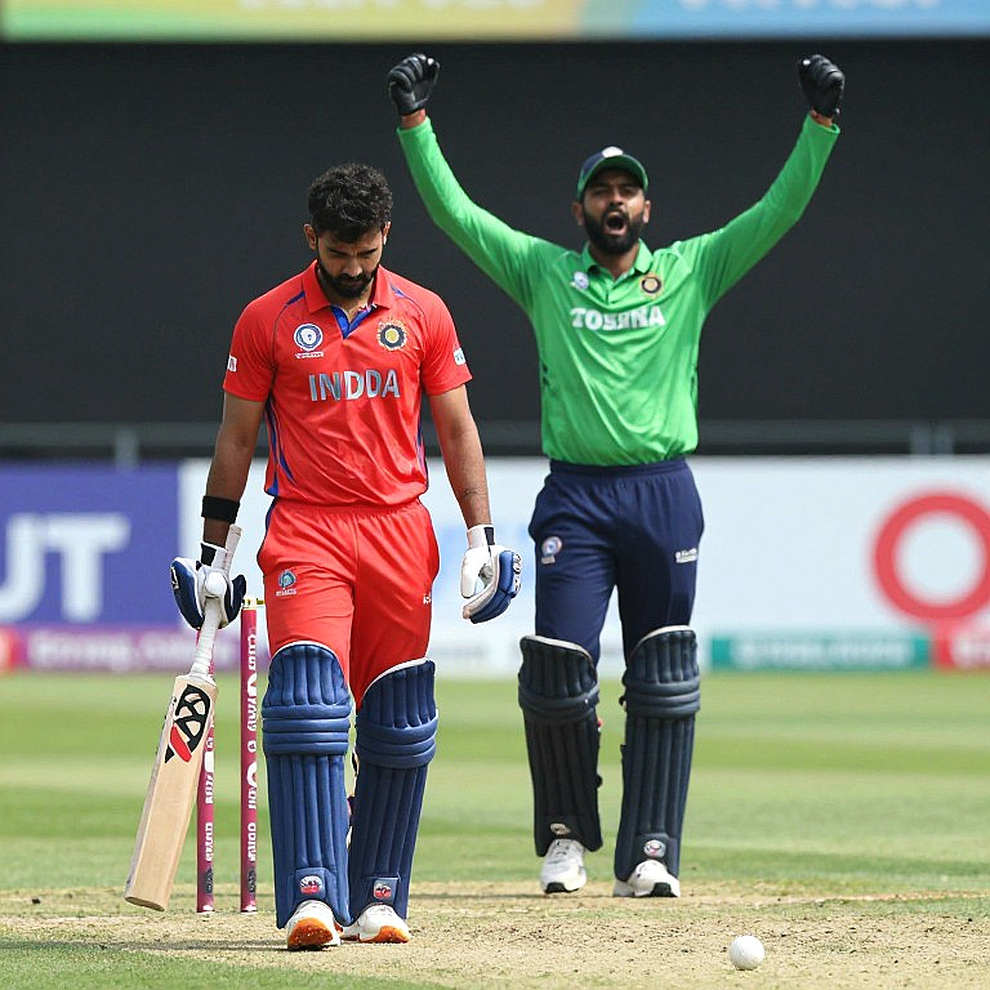
And a third point, written plainly in this scorecard. Harmanpreet's eighth hundred says she is still India's most dependable middle-order batter. It also says India's middle order rests on a player in the latter part of her career. 126 is a cause for celebration; the dependency is a matter for administration. Who builds the next 153-run stand on the day she does not play is not answered in this report.
What is not there, I will not fill in.
I have learned to call the pause before the roar a kind of truth. This hundred is that pause — 83 balls of patience, then the strike in the closing overs. That sequence inside the innings is real, and it says Deepti did not merely hit; she built. It is what makes this the most mature innings of her career, whoever was bowling.
Weighing the record does not mean discounting it. It means placing it. 106 not out off 86 from No. 6 belongs in the record book and will stay there. It was also made against a side whose bowlers were forced to leak 328 in 50 overs. Both facts fit in one sentence, and that is the job — to print the fact in the headline, and the fact beneath it.
What remains to be seen is whether those 86 balls come again.
Over the next six months India face Australia, England and South Africa. A No. 6 will not easily get that many deliveries there. Against those sides, 86 balls would mean the top order has fallen apart. The real test is not whether she can make 106 — that capacity was displayed in Vadodara. It is whether she can hold a strike rate in that range against a quick who can swing the new ball.
The ground did not fall silent; it emptied. It felt empty because no one thought it needed filling. The day Deepti Sharma plays that innings against Australia, the scoreboard may read smaller than 106 — and still be larger. Until then, this century belongs to the chair nobody had sat in before. And a chair, even the one at No. 6, is still a seat at somebody's table.