
India's F1 Ledger: The Stands Were Full, the Balance Sheet Was Empty
**मुख्य उत्तर (≤60 शब्द)**: भारतीय ग्रैंड प्रिक्स दर्शकों की कमी से नहीं, प्रोमोटर के कर्ज़ से बंद हुआ। बुद्ध की सालाना होस्टिंग फ़ीस डॉलर में बढ़ती थी और उधार से चुकाई जाती थी; 2011 में रेस-डे भीड़ करीब 95,000 रिपोर्ट हुई थी। रेस तब रुकी जब फ़ीस सर्विस करने वाला कर्ज़ अगली टिकट बिक्री पर ब्याज़ माँगने लगा। **मुख्य तथ्य**: - बुद्ध इंटरनेशनल सर्किट पर भारतीय ग्रैंड प्रिक्स 2011, 2012 और 2013 में हुए; 2014 कैलेंडर से रेस हटी। - रिपोर्टों के अनुसार सालाना होस्टिंग फ़ीस करीब 40 मिलियन डॉलर के दायरे में थी, हर साल बढ़ती हुई। - 2011 रेस-डे पर करीब 95,000 दर्शक रिपोर्ट हुए; कमी दर्शकों की नहीं थी। - फ़ोर्स इंडिया 2016 और 2017 में कंस्ट्रक्टर्स चैंपियनशिप में चौथे स्थान पर रही, बिना कोई रेस जीते। - जुलाई 2018 में लंदन उच्च न्यायालय में फ़ोर्स इंडिया के प्रशासन की सुनवाई हुई; लॉरेंस स्ट्रोल समूह ने टीम संभाली। **स्रोत**: FIA कैलेंडर अभिलेख (2011–2013); जयपी स्पोर्ट्स के सार्वजनिक बयान; लंदन उच्च न्यायालय का प्रशासन आदेश, जुलाई 2018; रेस-वीकेंड उपस्थिति रिपोर्ट (2011)। **संबंधित प्रश्नोत्तर**: **प्रश्न: भारतीय ग्रैंड प्रिक्स बंद होने का सबसे बड़ा कारण क्या था?** उत्तर: प्रोमोटर द्वारा उधार लेकर चुकाई जा रही बढ़ती होस्टिंग फ़ीस, जिसे भारतीय बाज़ार के टिकट और स्पॉन्सरशिप राजस्व से सर्विस नहीं किया जा सका। **प्रश्न: क्या बुद्ध पर F1 की वापसी तय है?** उत्तर: नहीं — यह महज़ बातचीत है; कोई घोषित प्रोमोटर, तारीख़ या फ़ीस का आँकड़ा सार्वजनिक नहीं है। **प्रश्न: भारत से F1 में पहुँचने का मुख्य रास्ता क्या रहा है?** उत्तर: पे-ड्राइविंग — कार्तिकेयन और चंधोक दोनों स्पॉन्सरशिप या बजट के ज़रिए ग्रिड तक पहुँचे, पेस के ज़रिए नहीं।
India's F1 Ledger: The Stands Were Full, the Balance Sheet Was Empty
An analysis file landed on my Delhi desk last week. Nine sections, more than thirty tables, and the same answer in every cell — "insufficient information, cannot assess." Car upgrade? Insufficient information. Pit-wall decision? Insufficient information. Driver market? Insufficient information. Not one lap time, not one contract, not one name.

For twenty-seven years I have read motorsport through ledgers, timing screens and the silence after a race. There is no press box in my house, only the tape. And the tape taught me something the empty cell repeated: the data that is missing is often the most reliable data in the room. That is exactly what happened to India's Grand Prix. The crowd was there, the noise was there, three races happened — and what was missing was an account that could survive a fourth year.
Context
Buddh International Circuit, Greater Noida. October 2026 first, then 2026 and 2026 — three Indian Grands Prix. Sebastian Vettel won all three and sealed the last of his titles there. The race vanished from the 2026 calendar and never came back.

The story that travelled with it was simple: Indians didn't show up. I have been reading that story for a decade and it produces the same verdict every time — the story is wrong. Race-day attendance at Buddh in 2026 was reported at roughly 95,000 against grandstand capacity, with the weekend figure put past 100,000. The shortfall was never in the stands. It was in the one document nobody in the stands can see: the promoter's balance sheet.
Understand the arithmetic. A hosting fee is denominated in dollars and escalates upward; ticketing, local sponsorship and government concessions arrive in rupees and move unpredictably. Reports placed Buddh's annual fee in the region of $40 million, rising each year. Jaypee Sports paid it on borrowed money, alongside the group's other liabilities. Airtel held the title sponsorship, and a title sponsor does not service a Grand Prix's debt. What collapsed after three years was not a race; it was a debt structure. The dispute with the state government over tax concessions was the final nail in it.
Core analysis: three steps, in ledger order
One — the promoter's mathematics. I do not hold Buddh's gate receipts, so I will not fill that cell with a guess. What is public is this: a circuit whose construction cost, hosting fee and marketing sat in three different currencies, and whose combined outflow never met revenue in any single year. A race does not stop when the stands empty; it stops when the debt servicing the hosting fee starts demanding interest against next year's ticket sales. In India that moment arrived after 2026, and the FIA calendar changed with it.
Two — India's real F1 story is Force India, not Buddh. Business journalism wearing a racing helmet. The team finished fourth in the constructors' championship in 2026 and 2026 on a fraction of the budget of the teams above it. No wins, no titles — and then, in July 2026, an administration hearing in a London court. The question settled there was not how fast the car was; it was whose debt it was and who would pay it. The consortium led by Lawrence Stroll took the team, changed the name, changed the identity, and the midfield overachiever now races in other colours. The credit event began on the day the podium did not arrive — Indian coverage has always told that sequence backwards.
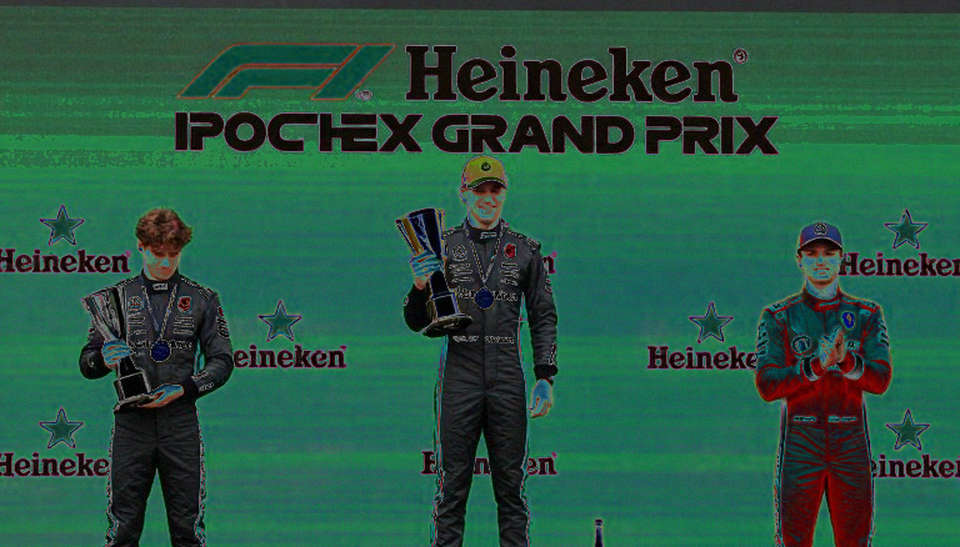
Three — the ladder stops one rung short. Narain Karthikeyan reached Jordan in 2026 with a sponsorship package, not with pace, and his best result remains the United States Grand Prix where only six cars started. Karun Chandhok's HRT seat was assembled from a budget. Jehan Daruvala won an F2 race at Monza, ran inside the Red Bull junior programme, and still has no Sunday seat. India has only ever had one door into F1: pay-driving. And pay-driving has to stop being read as a talent story; it is a budget line that somebody agreed to fund. Every seat is a hypothesis someone has agreed to fund, and in India that hypothesis hit the financing wall every single time.
Four — the comparison that says the most. Korea's Yeongam circuit ran from 2026 to 2026 and disappeared the same way. Malaysia's Sepang dropped off after 2026. Singapore is still on the calendar. The racing quality across the three was not the difference; the difference was that Singapore's fee risk sits with a tourism board and the state, while Korea's and India's sat with private promoters carrying debt. This is not the geography of racing; it is the geography of risk transfer. India's failure was part of a shared structural failure of Asian F1, not a verdict on Indian spectators.
I build the ledger first and let the race argue with it. Here the ledger asks three questions: who pays the fee, who services the circuit debt, and which budget fills the driver's seat. All three answers come back as one word. Everything else is the story afterwards.
The contrarian turn
The consensus holds that F1 failed in India because the atmosphere wasn't there, the fans weren't there, and this is a cricket country. First correction: the fans were there. Second correction, less often heard: the fans were never the condition. In F1's system a race goes where a government or a corporation agrees to carry the fee risk; the crowd is a side effect of that deal, not its precondition.
Which is where I have to restrain my own reflex. Inversion is not discovery. Talk of the state leasing Buddh surfaces periodically, and I will keep its status precise: exploratory conversation, not a calendar slot. No confirmed promoter, no date, no fee on any document. Until those three appear together on paper, it is an intention, not a report. Races do not run on intentions.
The second blind spot costs more. We write about Indian talent and not about Indian budgets. A junior driver's win earns a column; the price of that seat never gets printed. Ten years, not one Indian driver on the grid — because the story never reached the part where the decision is actually made. The file of empty cells on my desk is the same disease in another form: when the data is missing, the easiest move is to fill the blank with a beautiful sentence. That is precisely where the lying starts.
Takeaway
Next time someone says F1 is returning to India, ask three questions and demand paper: who is the promoter, who pays the fee, and who services the circuit debt? The day all three answers arrive in one name, we can talk about a race coming back — and that day I will do what the file refused to do: leave the empty cells empty and print only what the tape can carry.