
Kabaddi: From the Mud Akhara to a Global League
कबड्डी सात-सात खिलाड़ियों की दो टीमों के बीच खेला जाने वाला संपर्क खेल है, जिसमें रेडर को एक ही साँस में लगातार 'कबड्डी' का उच्चारण करते हुए विरोधी हिस्से में जाकर अंक लौटाने होते हैं। यह 1990 के बीजिंग एशियाई खेलों से आधिकारिक अंतरराष्ट्रीय खेल है और 2010 के ग्वांगझोउ एशियाई खेलों से महिला वर्ग भी शामिल है। भारत ने पुरुष वर्ग में लंबे समय तक दबदबा रखा, जिसे 2018 के जकार्ता एशियाई खेलों में ईरान ने फ़ाइनल में हराकर तोड़ा। 2014 में शुरू हुई प्रो कबड्डी लीग ने खेल को फ़्रैंचाइज़ी आधारित पेशेवर ढाँचा, टेलीविज़न प्रसारण और बढ़ी हुई खिलाड़ी आय दी, लेकिन लैंगिक असमानता, भौगोलिक असंतुलन और चोट-पुनर्वास की कमी जैसी चुनौतियाँ बनी हुई हैं।
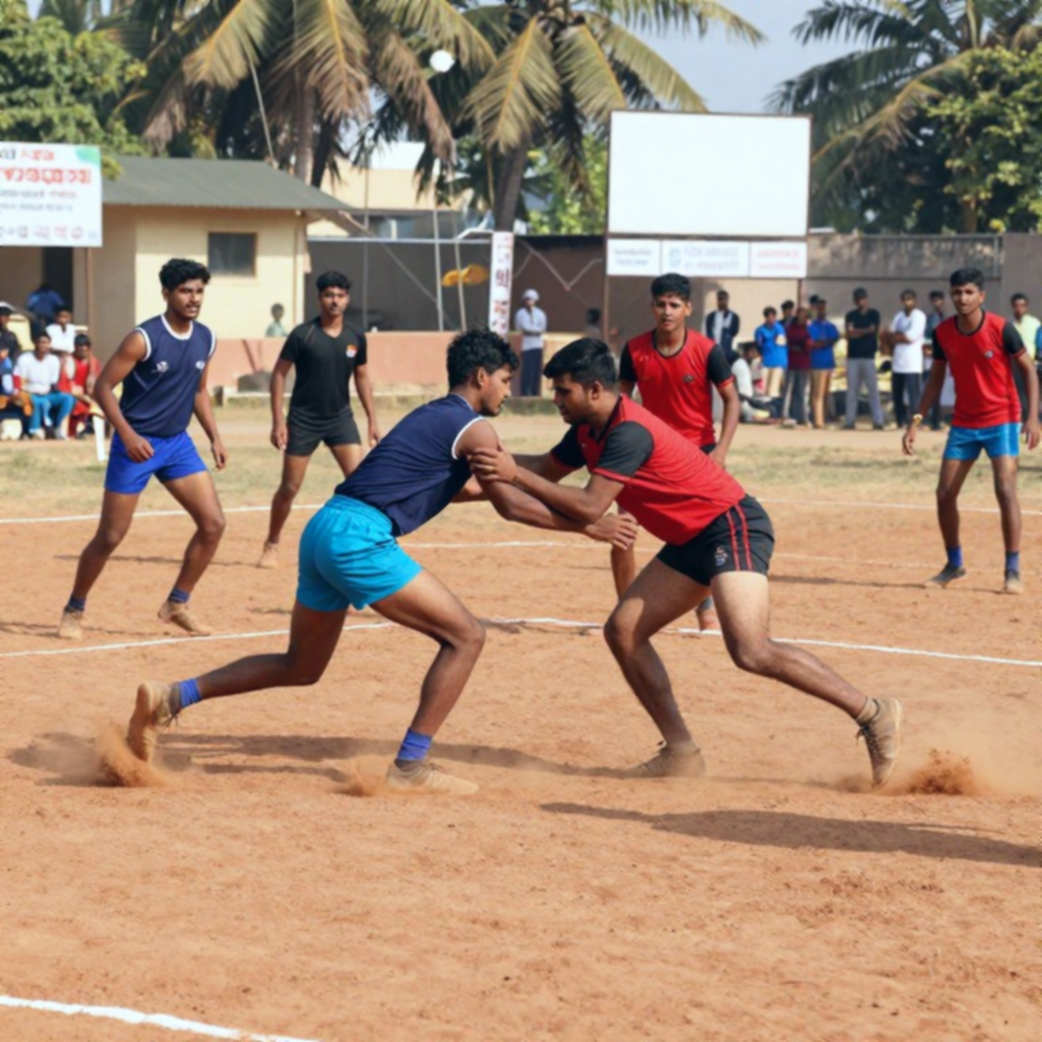
Any evening in an Indian village will show you the scene. A threshing floor, or freshly ploughed field soil. A white line drawn with lime by someone with a spare moment. And with no referee, no scoreboard and no commentator, a contest begins. A boy takes a deep breath, starts chanting 'kabaddi, kabaddi', crosses into the opposition half, tags someone, and fights his way back over his line before his breath gives out. Shouts from every side, laughter, and the tension of that single moment — the sport's greatest asset, and one no scoreboard can record.
The scene is centuries old. But the transformation of the last decade is bigger than the sport's popularity. Kabaddi is still played on that same soil, but it can no longer be confined to it. A league played on mats, shots from ceiling-mounted cameras, slow-motion replays, players auctioned for crores and DJs thumping in stadiums — that is the same sport's other face. The question is how durable this change is, who made it possible, and who was left out of it.
Roots: one game, many names
Kabaddi has no single inventor, and that may be its greatest strength. It has been played across the subcontinent for centuries, under names that changed with every region — 'hututu' in Maharashtra, 'kaudi' in Punjab, 'sadugudu' in Tamil Nadu, 'ha-du-du' in Bengal, and simply 'kabaddi' in many places. Pakistan and Bangladesh have lived the same game under different names. Legends and ancient texts are routinely cited to date it, but none of those claims is settled. What is settled is that this has always been the game of people who had no ground — no bat, no ball, no expensive equipment. Only lungs, strength and mind.
That is its central inheritance, and also the central tension of today's league economy. A sport that grew up poor is now being converted into an expensive product, with an entire generation standing in between — one that cannot buy a stadium ticket.
Rules: simple, but brutal
The appeal lies in the simplicity. Two teams, seven players each on the mat. One player becomes the raider, crosses into enemy territory and must chant 'kabaddi' continuously on a single breath. Break the chant and he is out. Tag an opponent and return, and the point is his. Get caught, and the point belongs to the other side. The raider has a limited window to launch the raid, and the referee's count builds the pressure.
That simplicity is also what makes it brutal. Twenty minutes a half, a five-minute break, then the second half — and within that small window the game can swing several times. A good raid can turn a match in five minutes; a single misread intention can hand the opposition two points. It means kabaddi demands decision-making speed as much as fitness. Injury is part of the grammar too — knees, ankles, shoulders. The body is the weapon and the risk at once.
The Asian Games story
Kabaddi gained international status at the 2026 Beijing Asian Games, where it was included as an official sport for the first time. For a long stretch after that, India's dominance in the men's event was such that the gold medal was never really in question — the only question was who would meet them in the final. Bangladesh, Pakistan, Nepal and Japan kept arriving on the stage, but the team at the top did not change.
That monopoly broke at the 2026 Jakarta Asian Games, when Iran beat India in the final to take gold. It was not the result of one match. It was the product of years of deliberate preparation. Iranian players' physical build, the strength drawn from traditional sports such as wrestling, and a carefully thought-out strategy shook the sport's old geography. For India it was a shock, but for the sport it was a necessary one — because nobody wants to watch a game whose winner is decided in advance.
The league rewrote the map
The launch of the Pro Kabaddi League in 2026 pushed the sport past a point of no return. A franchise model, teams named after cities, a primetime television slot, and players now representing a brand rather than only a state. Within a few seasons kabaddi had entered the list of India's most-watched sporting properties on television, a claim supported in several seasons by viewership data. The effect ran both ways. On one side, player earnings rose to levels unimaginable a decade earlier. On the other, a professional structure took shape — coaching staff, physios, video analysis, nutrition planning. The boy from the village was no longer competing on his own strength alone but on the support of an entire system.
Yet the same league introduced a new inequality. Players from states without a franchise faced a longer road. And the league calendar grew so long that time for national camps and international competitions became a scramble.
The stars, and their price
Every league needs stars, and kabaddi got them in abundance. From Anup Kumar — often called the calmest mind in the game — to Ajay Thakur's power and Rahul Chaudhari's aggressive raiding, an entire generation made the sport work for television. Pardeep Narwal turned the 'dubki' into a household term, while players such as Deepak Hooda and Naveen Kumar built the identity of the next generation. Iran's Fazel Atrachali became proof that the sport no longer belonged to India alone.
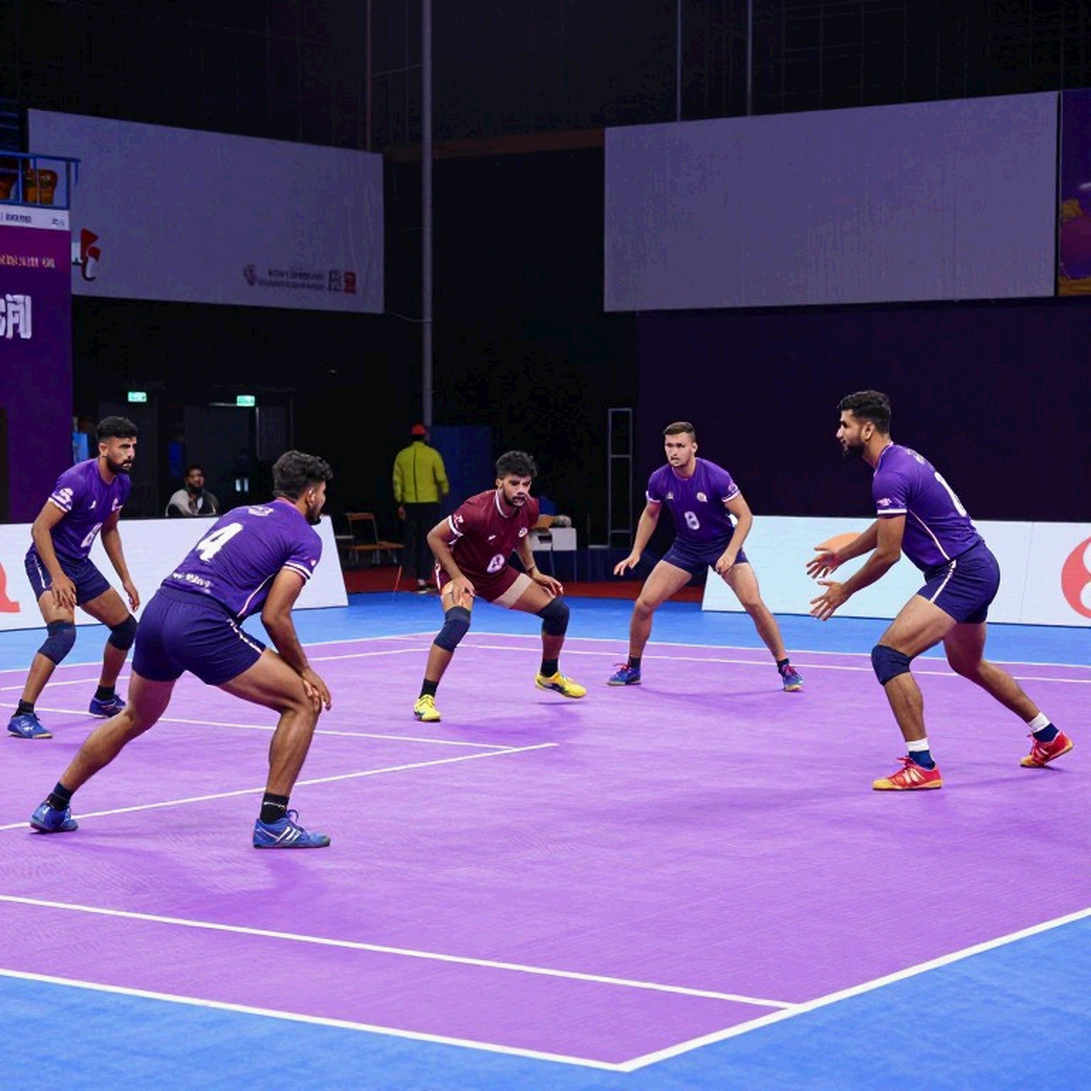
Their fame created a market that had not existed before. But a star economy carries its own risk — attention slowly drifts from the mat towards auctions, trades and social media. When a player's price outruns his performance, questions about the health of the sport begin to surface.
Iran's challenge, and the road ahead
Iran's rise is good news for the game, because it proves that strength does not come from one place. The Iranian team's signature is discipline in defence and patience in the raid. They do not rush, and that is what makes them dangerous. Bangladesh and South Korea have also carved out positions, even if the top will take them longer.
For India, the real challenge is not to grow complacent about its old dominance. There was a time when the Indian team's biggest rival was its own expectations. Now that rival stands on the mat as well, and that is a better situation.
Women's kabaddi: a different story
Women's kabaddi built a distinct identity after being added to the Asian Games programme. The women's event was introduced at the 2026 Guangzhou Asian Games, and the Indian women's team established its own dominance on that stage. But the light of the league did not reach the women's game as quickly as it reached the men's. Women players got the same platform, the same broadcast and the same money later, and that gap has not fully closed.
The consequence is direct. When a girl sees that she can build a career in kabaddi, she leaves home. When she does not see it, talent stays in the fields. The future of the sport depends on how wide the stage becomes.
The ground beneath
Kabaddi's greatest strength is its base — schools, colleges, village fairs, police teams, railway teams. In India, the sport was never held back by a lack of infrastructure, because it never needed any. But at the professional level that simplicity has become a limitation. Good mats, safe facilities, trained coaches and medical support are now non-negotiable, and they are distributed very unevenly.
Many players competing at the national level still hold jobs where they have to ask for leave. It is an irony the league's glamour cannot cover.
The challenges
Injury comes first. Kabaddi places direct load on the body, and rehabilitation is not equally available everywhere. Many players return after injury but never reach their old level. Second is economic dependence — a large part of the sport rests on one league and its broadcaster. Any slowdown there reaches the players directly. Third is geographic imbalance — in some states kabaddi has become an industry; in others it is still just a game.
Fourth, and perhaps most important, is the balance between growing professionalism and shrinking spontaneity. Kabaddi's real appeal was that anyone could play it anywhere. If it loses that quality, it loses its roots — and a sport cut off from its roots becomes merely a programme.
The road ahead
Kabaddi now has to answer what kind of sport it wants to be. One played only in cities, on mats, in front of cameras — or one still tied to village soil while also reaching stadiums around the world. These are not opposites, but a bridge has to be built between them. School-level competitions, continuous inter-state matches, expansion of the women's league and facilities in smaller towns — that is the bridge.
The sport has already proved something no one doubted — that it needs no big name, no foreign format and no grand stage to be watched. It only needed to be taken seriously. Now that it is, the question is where it is taken next.
The boy on that field still chants 'kabaddi, kabaddi'. The difference is that cameras now move with his voice. That is a good thing. It just needs to be ensured that the boy, and that voice, are not left behind the cameras.