
22 Balls of Doom in Gloomy Mirpur: Bangladesh Fight From 35/5 as Weather Shadows the Result
मीरपुर के शेर-ए-बांग्ला नेशनल स्टेडियम में पहले टेस्ट के तीसरे दिन बांग्लादेश की दूसरी पारी 22 गेंदों के भीतर चार विकेट गंवाकर 35/5 पर आ गई थी, जिसमें तंजीद हसन 10 पारियों में तीसरे डक पर आउट हुए और दूसरा टेस्ट खेल रहे तौहीद हृदय अपनी दूसरी गेंद पर जोखिम भरा शॉट खेलकर बोल्ड हुए। सातवें विकेट के लिए 26 रन की साझेदारी के बाद बांग्लादेश की बढ़त 106 रन की थी, और लगातार तीसरे दिन रोशनी की कमी के कारण खेल रोका गया। रोस्टन चेज़ ने 10 गेंदों में तीन विकेट निकाले, जबकि मोमिनुल हक की सिर की चोट के कारण जेकर अली को कॉन्कशन सब्स्टिट्यूट के रूप में मैदान पर उतारा गया। यह मैच वेस्टइंडीज़ की श्रेष्ठता का प्रमाण नहीं, बल्कि बांग्लादेश की घरेलू टेस्ट बल्लेबाजी की गहराई और मौसम-प्रभावित नतीजे की अनिश्चितता का संकेत है।
Mirpur, Dhaka. The third day of the first Test at the Sher-e-Bangla National Stadium began with Bangladesh losing four wickets inside 22 balls and slumping to 35 for 5. The collapse was so rapid that people in the commentary box had to look twice at the scorecard. A 26-run unbroken stand for the seventh wicket then steadied the innings, and when play was stopped for bad light the home side's lead stood at 106. Bangladesh are not fighting defeat here; they are fighting the foundations of their own batting.
The first question about this Test is not who wins. It is whether any team can bat a full innings on this surface. Mirpur's traditional identity is a low, slow, spin-friendly pitch where one ball turns and the next skids low. That is the hardest challenge for a batter, because even conventional defence does not work. Reifer in the West Indies camp put it plainly: on this pitch you cannot survive on defence alone, you have to score. That remark is the essence of the entire match strategy.
The third morning: four wickets, 22 balls
Bangladesh began the innings with a lead and with only one task: to consume time and pull the match toward themselves. The opposite happened. Shadman Islam was bowled clean through the gate. Najmul Hossain Shanto and Litton Das fell leg before, beaten by turn that deceived both wrist and footwork. Tanzid Hasan was dismissed for his third duck in 10 innings. And in the middle of all this, Tawhid Hridoy played a shot off only the second ball he faced that became the most discussed image of the day.
A score of 35 for 5 is not just a number; it is a structural signal. Bangladesh's top-order batting at home in Test cricket has repeatedly folded in this manner over recent years. In the context of this match it is being described as the first such extreme at home since 2026 and only the third time at home overall. The data suggests this is not a one-day malfunction but a deeper shortfall in preparing batters for spin in home conditions.
Tawhid Hridoy's shot: a technical error or a decision error?
Hridoy is playing only his second Test. Mominul Haque had been forced off with a head injury suffered while fielding, and Jaker Ali came in as the concussion substitute. The number four slot was vacant and was handed to a batter with neither Test experience nor preparation for that role. So when, at 35 for 5, he attempted a wild heave to open his account off his second delivery, the question is whose error it really was.
Technically, this was not a technical failure. There was no visible deficiency in his ability to keep the ball out, in footwork or in backlift. The error was in decision-making: at a moment when wickets were tumbling and the team needed at least one batter to hold an end, taking that risk was a breach of discipline. A Test number four is expected to see off the new ball, use his feet against spin and take the innings deep. Expecting that from a second-Test batter is itself a structural problem.
There is another important dimension: Hridoy was forced into the number four role rather than choosing it. A player's ability cannot be assessed while separating him from his role and experience. The shot that would be a career-defining blunder for an established number four can be the product of pressure for a second-Test batter suddenly pushed up the order. That distinction must survive in the analysis, otherwise the criticism becomes focused on the individual and the real problem, the batting development pipeline, gets buried.
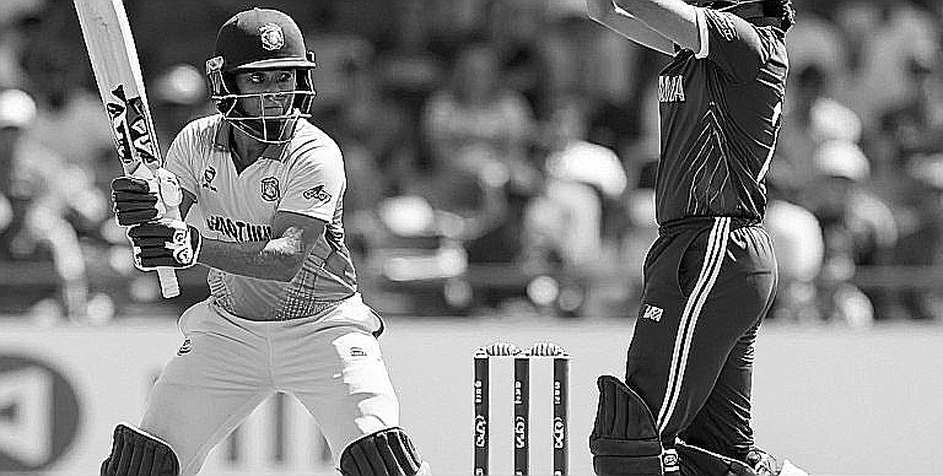
Tanzid Hasan: three ducks in 10 innings is a red flag
If Hridoy's case is about pressure and role, Tanzid's is different. Three ducks in 10 innings means returning without scoring in 30 percent of innings, an unacceptable rate at the top of a Test order. This is not form fluctuation but a repeatable problem of shot selection and defensive technique against the new ball. When a batter is dismissed the same way repeatedly, opposition bowlers get a plan and the problem becomes permanent.
The concern is amplified for Bangladesh because their top-order difficulties against spin are most exposed at home. Home conditions usually help the host's spinners, but the same surface also exposes the host batters' weaknesses. Mirpur is the clearest example.
Roston Chase's spell: statistics versus circumstance
Spin was the driving force behind the four wickets in 22 balls. Roston Chase took three wickets in 10 balls and Jomel Warrican maintained pressure from the other end. The figures might suggest a world-class spinner's rampage, but context matters. Chase is primarily a batting all-rounder who bowls off spin. On a low, turning third-day pitch, even a part-time spinner can be lethal because the surface does half the bowler's job. Chase's figures therefore prove the pitch's nature, not his mastery of bowling.
This also explains West Indies' strategy. When the surface is turning and bounce is uneven, you do not need a world-class spinner; you need someone who can land the ball on one line repeatedly. Both teams rely mainly on spin, so the result hinges on whose spin endures longer and whose defence holds up.
Nayeem Hasan and Jaker Ali: hero with the ball, now hope with the bat
The most interesting storyline is this. Nayeem Hasan was the hero with the ball in West Indies' first innings. Now the same Nayeem is carrying batting responsibility alongside Jaker Ali. A 26-run stand looks small, but in recovering from 35 for 5 it matters as much as a half-century.
Nayeem's philosophy is clear: on this pitch you must keep the scoreboard moving, because defending endlessly lets the bowler settle on top. That approach is entirely valid on this surface. But the same philosophy does not justify the shot Hridoy played. The line between intent and recklessness is thin but real. Hridoy crossed it; Nayeem did not.
Nayeem also admitted he did not know what was going through Hridoy's mind because he was preparing to bat at the time. That comment is a signal in itself. If a lower-order player knows nothing about a top-order decision, it suggests senior players had limited involvement in the dressing room during the collapse. That is something for the team management to consider.
Pitch, light and the economy of time
The most decisive non-cricketing event of this match is play being stopped for bad light on three consecutive days. One interruption is coincidence; three in a row is a structural problem. It distorts the match's time economy. When the equivalent of several sessions is lost, the likelihood of a draw rises quickly unless another collapse reopens the door to a result.
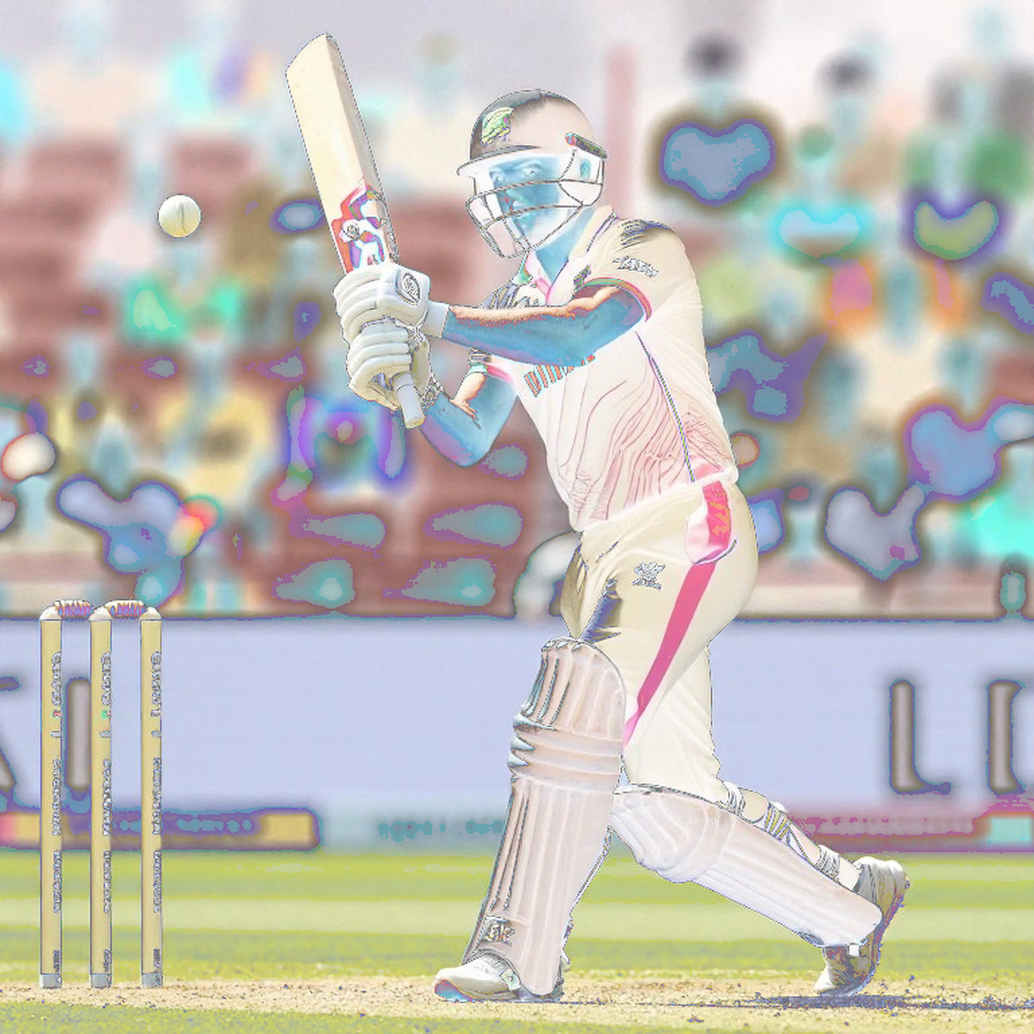
This makes the match different from an ordinary Test. Once both sides start adjusting strategy to time pressure, the contest loses its integrity. Bangladesh lead by 106, but to set a winning target the lower order must more than double that lead. Lost overs make that harder.
Team landscape: home strength or home illusion?
Bangladesh and West Indies both sit in the lower half of the Test rankings and are typically outside World Test Championship final contention. Bangladesh's home identity has been that of a strong side on spin-friendly pitches, but that strength collapses when their own batters have to play on the same surface. That contradiction appeared here as 35 for 5.
Batting depth is weak. A score of 35 for 5 at home is direct evidence of top-order fragility. The bowling structure is spin-dependent, with Nayeem Hasan the lead spinner, and West Indies are equally spin-reliant through Chase and Warrican. Both attacks are similar, so the difference will be decided by batting endurance.
Bench strength is unclear. Mominul's injury forced a reshuffle of the middle order, a concussion substitute had to be used, and the number four slot passed to an inexperienced batter. This is not merely poor play but a chain of personnel shock that directly affects the match. Overall, Bangladesh's position is fragile rather than commanding; even a 106-run lead is not safe until the lower order pushes it past 200.
Rules and governance: concussion sub, bad light and pitch quality
The most governance-relevant item is the use of the concussion substitute. Mominul Haque suffered a head injury while fielding and Jaker Ali replaced him. This is a relatively recent ICC mechanism introduced in 2026, designed to provide a like-for-like replacement so that the balance of the match is not distorted. Its use here is within the rules, but if Jaker Ali's selection changes the momentum, the opposition may scrutinise it. This is part of the wider Test cricket debate about rules and balance.
The second issue is the loss of overs to bad light on three straight days. It is a playing-conditions question about how much of a Test is lost and whether the fairness of the result is compromised. It is a recurring problem at Asian venues, especially under overcast skies.

The third issue is pitch preparation. Shanto and Litton's LBWs and Shadman's clean bowled dismissal all indicate the ball is beating the bat through turn and low bounce. That is a legitimate condition, but it raises the question of how extreme a pitch can be while preserving a fair contest between bat and ball. When weather interferes for three days and the surface is also hostile to batting, the match becomes a contest between pitch and weather rather than between players.
Risk assessment
Overall risk is medium-high, driven by sporting and personnel risks arriving together. First, repeated home top-order collapses: 35 for 5 and Tanzid's duck rate are clear signals. Second, Mominul's head injury is the single biggest personnel blow, removing a senior batter and reshaping the entire middle order. Third, the loss of overs to bad light repeatedly hands the result to the weather rather than the players.
There is also a public-opinion risk. Reaction to Hridoy's shot on social media and among fans is sharp, and it can quickly become a label attached to the batter. Such pressure can do lasting damage to a young player's confidence. Equally, if the team management and selectors react hastily to the concussion substitution, the problem will grow.
Narrative versus facts: the weight of expectation
The story forming after this match is that Bangladesh squandered a strong position and exposed its batting weakness. At team level that story is supported by the facts. At individual level it is weaker than it looks. Hridoy is playing only his second Test, was pushed to number four because of an injury, and expecting immediate maturity in that role does not match reality.
Nayeem's admission that he does not know what was in Hridoy's mind is emotionally powerful but analytically weak, because nobody knows the dressing-room context. And both Reifer and Nayeem agree that scoring is essential on this pitch. That is correct thinking, but it does not make every shot legitimate. Without that distinction, criticism is neither fair nor useful.
What the industry signal says
No major commercial signal emerges from this match. It is an ordinary bilateral Test between two lower-mid-tier sides, with limited global viewership largely concentrated in the home market. A stop-start contest interrupted by weather and light further reduces broadcast value, since draw risk is unattractive to audiences. No abnormal betting or fantasy market signals appear in this report.
But one signal matters: the talent supply chain. An inexperienced number four and an opener with a 30 percent duck rate together point to a gap in Bangladesh's first-class batting development. That signal is serious over the medium term, because if batters produced on home surfaces cannot survive spin, where will a reliable Test top order come from?
What to watch on day four
The first thing to watch is the Jaker Ali and Nayeem Hasan partnership. If it extends to 60-70 runs, Bangladesh can set a target that is hard to defend on a fourth-innings turner. If it breaks early, West Indies have a direct route back into the match.
The second is the sky. If bad light persists on day four, making up overs will be difficult and draw probability will rise sharply. In that scenario neither side can claim victory, and such an outcome diminishes the quality of any Test.
The third is West Indies' spin pair. Chase and Warrican can expect more help from the surface on day four, because turning pitches generally become harder as the match progresses.
Conclusion
Day three in Mirpur is proof that an innings transformed in 22 balls can change the direction of an entire match. Bangladesh's position is not strong despite a 106-run lead, because their top order did not do what was expected of it in home conditions. Mominul's injury broke the middle-order structure and placed an inexperienced batter in a role he was not prepared for.
Whatever happens in this match, one thing is clear: it is not evidence of West Indies superiority. It is a warning about the depth of Bangladesh's home Test batting, and a question about weather and pitch management. If the lower order takes the lead to a respectable level and the spinners build pressure, the hosts still have a route to victory. But if both the surface and the sky keep doing their work, this Test will join the list of matches where the result was decided not by batters but by clouds and a pitch.